Showing posts with label lesser evilism. Show all posts

Lesser Evilism and the Psychopathology of Political Life

Lesser evilism is a primary component of the bipolar mentality that sustains the failed Republican-Democrat two-party state.  And like the duopoly itself, the lesser-evilist is two-faced.  On the one hand, partisans of the Republican and Democratic parties paint the choice in favor of the lesser evil as pragmatic and realistic.  "Like it or not, we have a two-party system," they are fond of saying.  In a rare moment of honesty, they will admit that neither the Democrats nor the Republicans represent the interests of the American people, they might even state outright that the reigning two-party system is inimical to democracy and republicanism itself, but then in the very next breath they will go on to argue that one side of the duopoly divide is not as dangerous as the other, not as intolerable as the other, not as objectionable as the other.

Despite recognizing the failure of the two-party state, the subject is incapable of liberating him- or herself from the behaviors that reproduce it.  This mentality is akin to a form of political obsessional neurosis insofar as it reveals a "poor ability to adapt to one's environment, an inability to change one's life patterns, and the inability to develop a richer, more complex, more satisfying [political] personality."

On the other hand, we can distinguish this form of lesser evilism from its primary counterpart, which begins not from a more or less pragmatic and realistic appraisal of the two-party state, but rather from an hysterical and psychotic obsession with the party that represents the greater evil for the subject.  A key characteristic of this mentality is the condensation of personal and political anxieties, which are then  projected onto a single figure who comes to represent an existential threat for the subject.  The removal of this threat becomes the primary goal of all political activity, with the result that the subject perceives any alternative as incomparably preferable, thus leading to the embrace of the lesser evil.  We might liken this brand of lesser evilism to a form of obsessional psychosis.  Bush Derangement Syndrome and Obama Derangement Syndrome are common examples of the disorder.  At Salon, Glenn Greenwald provides us with a concise description of the phenomenon:
Every four years, The Other Side is turned into the evil spawn of Adolf Hitler and Osama bin Laden.  Each and every election cycle, each party claims that -- unlike in the past, when Responsible Moderates ruled and the "crazies" and radicals were relegated to the fringes (the Democrats were once the Party of Truman!; Ronald Reagan was a compromising moderate!) -- the other party has now been taken over by the extremists, making it More Dangerous Than Ever Before.  That the Other Side is now ruled by Supreme Evil-Doers means that anything other than full-scale fealty to their defeat is viewed as heresy.  Defeat of the Real Enemy is the only acceptable goal.  Election-time partisan loyalty becomes the ultimate Litmus Test of whether you're on the side of Good: it's the supreme With-Us-or-With-the-Terrorists test, and few are willing to endure the punishments for failing it.  It's an enforcement mechanism for Party loyalty that -- by design -- breeds slavish partisan fealty.
None of this has anything to do with reality.  For as long as I can remember, Republicans -- every election cycle -- have insisted that the Democratic Party has "now become more radical than ever," while Democrats insist that the GOP has now -- for the first time ever! -- been taken over by the extremists.
Together, the neurotic and psychotic lesser evilist form a binary totality not dissimilar from the relation between the masochist and the sadist, and constitute a threat to representative, democratic, republican government.  If you or anyone you know shows signs of neurotic or psychotic lesser evilism, it is most likely an indication of a deeper political imbalance.  Contact an independent political psychologist for consultation immediately. 

A Conscientious Objection to Political "Science"

Judging from their comments and commentaries in the mainstream media, it would not be much of an exaggeration to say that political scientists are among the most reliable and reactionary supporters of the Republican-Democrat party establishment and ruling political class in the United States today.  Except, perhaps, for those deluded pundits who naively believe that political science is both non-political and "scientific."  Consider a recent op-ed in the LA Times by Seth Masket and Hans Noel, two political "scientists" from the University of Denver and Georgetown University, respectively.  Entitled "Don't Look to a Third Party Candidate," Masket and Noel argue against the very idea that a third party or independent candidate could win the presidency, and furthermore assert that even if one did, he or she would be stymied by a partisan Congress.

Their argument against advocacy for a third party presidential candidate boils down to one simple point: it's too hard.  It may be difficult for some to believe, but the position of these political "scientists" is literally that no one should support alternatives to the Democrats and Republicans in any presidential election because it's too difficult.  One need not wonder how specimens such as these might have counseled the leaders of the American revolution.  They begin thusly:
Why wouldn't the solution to our nation's problems be a moderate president, without ties to the usual suspects, who is free to simply do what is right?  The problem is, it's not going to happen. What's more, we really don't want it to.  It's not going to happen because the major party candidates have three huge advantages. They are already organized. They have built-in supporters. And our electoral institutions favor the largest two parties.
First of all, there is no substantive difference between "being organized" and "having built-in supporters." So their three huge advantages can be reduced to just two right off the bat.  Secondly, the fact that our electoral institutions favor the Democrats and Republicans is neither a coincidence nor a simple stroke of fate or luck.  The Democrats and Republicans have rigged our institutions to consolidate and maintain their grip on power.  The fact that our electoral institutions favor them is therefore conditional upon the fact that they are organized, thereby eroding the distinction between the two remaining advantages distinguished in the screed.   They continue:
To win the presidency, you have to campaign across the country. You have to build a campaign in state after state — from scratch. You have to assemble lists of donors and databases of voters to contact, and you have to develop a base of volunteers who can carry out the vital tasks of organizing and campaigning precinct by precinct.
This is meant as an argument against a third party or independent presidential campaign, but it should be noted that the same holds for any Democratic or Republican presidential campaign as well.  Taking this point to its logical conclusion, we'd have to conclude that no one should ever run for president because it's difficult, even with the huge advantages conferred by a supportive party apparatus.  And yet people do run for president, even though it is difficult. Indeed, people do things that are difficult all the time, despite the fact that they are difficult.  If everyone allowed the possibility of failure to deter them from doing anything, nothing would ever get done.  Failure is always an option.  But success is always a possibility.  They continue: 
Keep in mind that about 40% of the country votes Republican and about 40% votes Democratic in a presidential election no matter who the candidates are. Even if you could win over some of the less committed voters in the middle, it would be very hard to pull away those committed partisans. At best, an independent candidate could win 20% to 30% of the vote. 
The assertion here is demonstrably false.  Over 40% of the country doesn't even vote in presidential elections.  Less than 30% of the country votes Republican and less than 30% of the country votes Democrat.  Democrats and Republicans rarely obtain support from a majority of eligible voters even when you tally their votes together.  In most elections it's considerably less than that.  The political scientists then go on to reference Duverger's "law," to make the institutional or procedural argument against third party presidential candidates, and their abject cynicism shines through.  Excerpt:
Duverger's Law, named after Maurice Duverger, the French scholar who most explicitly articulated it, boils down to the idea that voters are strategic. In a winner-take-all election, they know there's virtually no chance of the third-most-popular candidate winning. Better to help determine which of the top two candidates wins. So they vote for the least objectionable of the candidates with a real shot at winning.
So the ideal candidate for these two political scientists is not the best candidate, or the most representative candidate, but rather the major party candidate who is not as objectionable as the other major party candidate.  This is nothing more than the old lesser evil argument dressed up in academic jargon.

Masket and Noel then argue that even if a third party candidate were elected president, it would be difficult for him to accomplish anything in his program because he would have no allies in a Congress dominated by professional partisans of the Democratic and Republican parties.  Here they essentially return to their initial argument that if something is difficult it is not worth doing.  Finally, they conclude by asserting the metaphysical claim that the two-party state is a "natural" phenomenon, and urging readers to work within the two-party state.  Excerpt:
All of this seems unfair. Why should these two parties have such an advantage? That's the wrong way to look at it. The Democrats and the Republicans are not our overlords. They are us. They are the natural creations of politically concerned citizens who want to make a difference . . . If you're not content with the way this country is being governed, one of the best ways to change it is to get involved with one of the existing parties and work to nominate and elect candidates at all levels of government who will fight for the things you care about. . . . Pining for an independent, third-party dictator is not only a waste of your time, but if you somehow got what you wanted, you'd quickly find it wasn't what you wanted at all.  [Emphases added.]
Of course, there is nothing "natural" about the dictatorship of the two-party state.  It is a wholly artificial construct created and maintained by self-interested lawmakers whose loyalty lies, first and foremost, with the Democratic and Republican parties themselves.  The assertion that the ruling two-party state is a "natural" or "organic" phenomenon is nothing more than obscurantist, metaphysical nonsense.

For some reason, these "scientists" furthermore fail to observe one of the most self-evident political phenomena in the United States today: the Democratic and Republican parties no longer represent the people of the United States and the people of the United States increasingly no longer support the Democratic and Republican parties.  If you wanted to end abortion, would you get a job performing abortions?  If you wanted to end the death penalty, would you sign up to be the state's executioner?  If you want alternatives to the dictatorship of the Democrat-Republican two-party state, why would you join the Democratic or Republican party?

Communist Party Endorses Obama and the Democrats for 2012

In an article for People's World, the chair of the Communist Party USA, Sam Webb, asks if it matters "which party wins."  Webb argues that while the Communists "have always advocated the formation of an independent people's party," Democratic Party victories create "space to struggle for a people's agenda."  Excerpt:
In our view, the differences between the two parties of capitalism are of consequence to class and democratic struggles.  Neither party is anti-capitalist, but they aren't identical either. Differences exist at the levels of policy and social composition. And despite the many frustrations of the past two years, the election of Barack Obama was historic and gave space to struggle for a people's agenda.

If, on the other hand, the Republicans had been victorious in 2008 the character of class and democratic struggles would have unfolded very differently. Our movement would have been on the defensive from Day One, the Democrats would be running for cover, and the Republicans would have an unfettered hand in their efforts to liquidate the welfare state, roll back the rights revolution of the 1930s and 1960s, and crush the people's movement - labor in the first place.  [Emphasis added.]
Though Webb says Communists "would have been on the defensive from day one" had the Republicans won the presidency in 2008, the point is undermined by the fact that their support for the Democrats is part and parcel of a defensive and reactionary political strategy, the primary aim of which is purely negative in character: ensuring that Republicans are defeated by Democrats.  In other words, it is nothing more than lesser evilism in the guise of progressive reformism.  He concludes:
We are keenly aware of the fact that the agenda of the far right is to bring this administration and country to its knees, with a heavy dose of racism, lies and economic sabotage, setting the stage for a full blown return to power of the most reactionary, racist, anti-labor, anti-women, homophobic and militarist grouping in U.S. politics . . .  no other party besides the Democratic Party stands a chance of beating the GOP next year.
Needless to say, liberal and progressive Democrats are not touting the endorsement in their commentaries and fundraising letters, while the more militant elements in the Communist party rank and file have been vocal opponents of Webb's political strategy.  On the other hand, ironically, tea party groups that have been co-opted and infiltrated by Republican party hacks are among the most passionate supporters of the negative and reactionary lesser-evilist political strategy favored by Webb, but from the other direction, of course.

The Suspension of Disbelief and the Ideology of the Two-Party State

One of the most revealing aspects of our politics under the Democratic-Republican two-party state and duopoly system of government is the fact that dishonesty is taken as an operational given.  The idea is expressed most succinctly in the old joke: How can you tell if a politician is lying?  His lips are moving.  To assume that we are being lied to – by our representatives, by government agencies, by their mouthpieces and cheerleaders in the mainstream and "independent" media, by advocacy groups, by corporations, etc. – is not cynicism.  It is realism.  To assume the opposite – namely, that we are not being lied to – is hopelessly naive. 

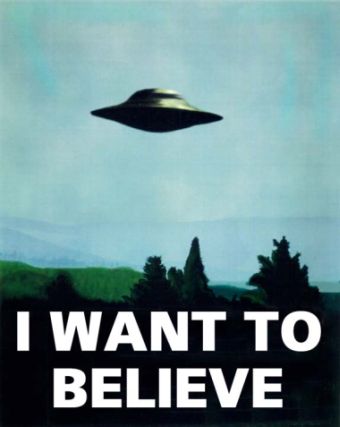
Ironically, however, in many cases such naivety reveals itself as just another form of dishonesty.  Americans know very well that their interests are not represented by the Democratic and Republican parties.  This plain fact is evidenced, for instance, in the prevalence of the argument in favor of the "lesser evil" between the two major parties by hucksters on both sides of the duopoly divide.  How then can we make sense of continued support for Democrats and Republicans by the American public?  Perhaps the simplest explanation is that such support is predicated on a willing suspension of disbelief.  Voters must ignore what they know to be true of political reality under the two-party state in order to justify their continued participation in the system.  They want to believe.  This was as apparent in the Obama campaign's "Believe in Change" slogan, as it is in the Tea Party's continued faith in the GOP.  In this way, people who know better sustain an ideological fiction that runs counter to their lived experience.

Strategic Voting and Lesser-Evilism

Is it possible to cast an honest vote for a Democrat or a Republican?  Under the two-party state, a significant proportion – if not an outright majority – of voters in the United States cast their ballots for the "lesser evil" between the candidates of the legacy parties.  The vote in support of the lesser evil is not in fact a vote in support of that particular candidate, rather it is a vote against the other candidate, the greater evil.  J. Todd Ring provides a philosophical analysis of lesser-evilism and strategic voting.  Excerpt:
While I can of course see the rationale for strategic voting, there is much to be said for voting with one’s conscience. When we consistently choose the lesser of two evils, our choices are reduced to evil, and the results are evil. When everyone holds their nose and votes, essentially, for one of the parties or candidates of the status quo, believing no other option is feasible or can succeed, this collective act of despair becomes a self-fulfilling prophecy: and low and behold, all other options are nullified – by our own act of choosing not to support them. . . .

How does a new party or a minor party build itself to a major force in politics? Certainly not by people choosing between the lesser of two evils and voting “strategically.” I’d almost be inclined to say that voting strategically is voting idiotically, for it is a vote of despair, a fatalistic action that presumes no major change is possible. While this is not entirely true, there is a great deal of truth to that picture painted. Maybe we should trust our conscience and common sense more often, and leave the horse racing to the track. This is not a game: it is our future . . .

A Libertarian's Declaration of Independence from the Republican Party

At Students for Liberty, UC Berkeley, Casey Given declares his independence from the Republican Party in a post entitled "The Myth of the Two-Party System."  He writes:
Having moved to a new place for the school year, I recently re-registered to vote for the upcoming election. Alongside my change of address, I also decided to change my party, switching from Republican to Libertarian, thus concluding my indecisive wavering for the last two years over which one to choose. . . . it seems now that whenever my “Big L” Libertarianism comes up in conversation, several of my friends seem to have the same punch line for me: “You shouldn’t have switched. Sure, Republicans are bad, but at least they’re lesser of the two evils, and they have an actual chance of winning!”
Given argues against siding with the lesser evil on the basis of the fact that they are admittedly still evil, and then asks whether there is indeed a difference in the degree of evil between the twin evils of the Democratic and Republican parties:
Perhaps I’m just blind, but I fail to distinguish any semblance of dissimilarity between Republicans and Democrats in modern politics. On the federal level, both parties have supported foreign interventionism in Iraq and Afghanistan, massive bailouts via the Troubled Asset Relief Program (TARP), violations of our civil liberties via the PATRIOT Act, and secretive prisons overseas such as Guantanamo Bay. And, mind you, this is under both Bush and Obama. Similarly, on the state level . . .
The now-standard Republican rejoinder to this argument admits that the GOP "lost its way," but then pleads for "one more chance," and points to the rhetorical opposition of Republicans to the Democrats' evil agenda.  The association between American voters and the major parties resembles nothing so much as a violently abusive relationship.  The partisans of the two-party state rely on the voters' imaginary identification with their captors, the ideological prison guards of our political system, to force acceptance of an intolerable status quo and state of affairs.  Freedom and independence today begins with freedom and independence from the Democratic and Republican parties.

Toward a Taxonomy of Duopolist Talking Points: Countering the Ideologues of the Two-Party State

As election day approaches we are likely to see proponents of the two-party state publish more and more articles railing against third party and independent voting, against third party and independent candidates for office and against third party and independent politics as such.  Any thoroughgoing analysis of the ideology that underpins the two-party state and duopoly system of government would eventually have to produce a taxonomy of the duopolist ideologue's arguments against third party and independent political activism.  Longtime readers of Poli-Tea might recall any number of posts detailing the inconsistencies and weaknesses of the most common arguments put forward by partisan Democrats and Republicans to dissuade others from building a viable opposition to the tyranny of the Democratic-Republican two-party state and duopoly system of government.  For example:
the historical argument states that because many third party and independent candidates have been unsuccessful in the past, they will never be successful in the future
the tautological argument states that third party and independent candidates will never win an election because we have a two-party system
the spoiler argument presumes that a vote for a third party or independent candidate is a wasted vote
the procedural argument states that third party and independent candidates cannot win elections because the rules of the game are rigged against them
• the hysterical alarmist argument states that there is no time to build a third party or independent political movement because if we don't vote for a Democrat or Republican in the next election, we're all going to die
• and so on . . .
It might be rather interesting to construct a psycho-political profile of the duopolist ideologue from these various arguments.  One might easily conclude, for instance, that the proponent of the two-party state is:
• an historical determinist, a fatalist even;
• incapable of independently-minded critique of the antiquated institutional forms that dominate our politics;
• a reactionary eager to prop up the ruling party-political establishment;
• always on the lookout for a means of rationalizing his unwillingness or inability to declare his independence from the politics of the two-party state;
• a perennial political apocalypticist, without a historical sense
• and so on . . .
It may be helpful to keep these potential traits in mind when countering the ideologues of the two-party state.  The onslaught of 2010 is already in full swing.  Let's consider but two examples.  At the Orlando Tea Party, Judson Phillips demonstrates that this tea party group has effectively betrayed its historical namesake and allowed itself to become an appendage of the ruling political establishment.  Phillips' article does nothing more than regurgitate the talking points of the duopolist ideologue.  He writes:
within the tea-party movement there is a small but loud group calling on members not to vote Republican, but instead to vote for a third party, such as the Constitution Party or the American Independent Party. Those who call for tea-party people to vote for these third parties point out that the Republicans cannot be trusted. The last time the Republicans were in power, they were as bad as the Democrats. They are absolutely right . . .
Unfortunately, we have no alternative. . . . this is America. We have a two-party system. . . . For those who still support these third parties, let me point out that none of them has ever elected a senator, congressman or governor. I am not sure they have even gotten someone elected as dog catcher. . . . This year, we need to stop the Obama/Pelosi/Reid axis of fiscal evil. We do that by electing Republicans.
In the space of just a few hundred words, Phillips manages to hit no less than three of the arguments listed above:  the tautological argument (it's a two-party system), the historical argument (third parties have failed in the past) and the spoiler argument (a vote for a third party is a vote for Pelosi).  According to our profile, then, might one not conclude that Phillips is a reactionary historical determinist who is incapable of independent critique of the two-party state?  Moreover, Phillips reveals the difficulty of determining whether the ideologue of the two-party state is motivated by ignorance or malice.  He states outright that no third party "has ever elected a senator, congressman or governor."  Of course, this is patently false.  There have indeed been third party and independent senators, congressmen and governors.  Phillips is either completely ignorant of the matter at hand, namely, US political history, or he is consciously engaged in a dishonest and deceitful effort to rally support for one faction of the ruling political class.

For an example from the other side of the duopoly divide, take this recent article by Robert Parry at Consortium News, entitled "The Teach-the-Dems-a-Lesson' Myth."  Parry writes:
If my e-mail inbox is any indication, many American progressives plan to use the Nov. 2 election as an opportunity to “teach the Democrats a lesson” by either not voting or casting ballots for third parties, even if this contributes to the expected Republican (and Tea Party) landslide.

The thinking seems to be that the loss of the congressional majorities will punish the Democrats for accepting half-measures and compromises on issues from health care and financial reform to job stimulus and war. The Left’s hope apparently is that the chastened Democrats will then shift toward more progressive positions and be more assertive.

However, modern American political history tells us that this strategy never works. After the four key elections in which many progressives abandoned the governing Democrats – in 1968, 1980, 1994 and 2000 – not only did Republicans take U.S. politics further to the right, but the surviving Democrats tacked more to the center and grew more timid.
Parry's piece is thus an extended variation on the historical argument.  However, his choice of historical precedents is rather revealing.  Parry chooses to compare the 2010 elections with those of 1968, 1980, 1994 and 2000.  But only one of the latter is a so-called mid-term election, 1994.  In his discussion of the other three elections, Parry obviously focuses on the dynamics of the presidential race under consideration.  The flaw?  This is not a presidential election year.  Parry is a member of the cult of the executive that views all political antagonism and struggle through the prism of presidential politics.  In a response to Parry's piece, Digby from Hullabaloo provides us with an example of the type of pop-political psychology that is dominant among supporters of the corporate parties.  She argues that the opposition between Republicans and Democrats can be understood as some sort of metaphysical opposition between "the lovers and the fighters":
The two political tribes in America attract different kinds of people. Let's call them the Lovers and the Fighters. (I think you can figure out who's who.)  The majority of people in those tribes tend to react to pain differently. When the fighters feel pain they instinctively hit back. When the lovers feel pain they instinctively withdraw . . .  [etc.] . . .

Parry clearly lays out the case in his piece that this technique of "teaching the Democrats a lesson" has resulted in failure over and over again. They learn the opposite lesson we are seeking to teach them every time. And I guarantee you that once again, the lesson they will learn from this upcoming election will not be that they weren't liberal enough. 
What is striking about the latter passage, however, is how similar Digby's point is to that of Phillips above.  Phillips agreed that it is "absolutely right" to assert that "Republicans are as bad as Democrats," but concluded that "we have no alternative."  Similarly, Digby recognizes that attempts by liberal and left-wing activists to move the Democratic party in their favored direction have "resulted in failure over and over again," and that the Democrats will likely learn the "wrong lesson" once more.  But still, Digby continues to urge support for Democratic candidates. 

The likes of Phillips and Digby are equally incapable of liberating themselves from the ideology of the two-party state and both labor under the delusions propagated and promulgated by that very ideology.  Digby continues to believe that Democrats are the "liberal" party despite all evidence to the contrary, and, she presumes that she is a liberal despite the fact that she supports the Democrats, who, she agrees, are complicit with Republican in "taking US politics further to the right."  On the other hand, Phillips continues to believe that Republicans are the "conservative" party despite all evidence to the contrary, and, he presumes that he is a conservative despite the fact that he supports Republicans, who, he admits, are "just as bad as the Democrats."

I've said it before and I'll say it again:  the Democratic Party is not "liberal" and the Republican Party is not "conservative."  They cannot be.  They are the vehicles of the ruling corporate-political class in its ongoing war against constitutional government and the people of the United States.  If you support the Democratic Party, you are not liberal.  If you support the Republican Party, you are not conservative.  If you support the Democratic or Republican party, you are a reactionary supporter of the reigning corporatist state, and are providing popular cover for the ruling political class.  In other words, you are part of the problem.

You're the Dog that Gets Beat: Declare Your Independence from the Two-Party Charade

In response to the liberal Democratic blogosphere's almost unanimous derision of Thomas Friedman's Sunday article suggesting a strong third party presidential candidate in 2012, Nate Silver at FiveThirtyEight today argues that the "odds against a third party bid are not as long as they seem."  He writes:
I suspect these analysts are being too dismissive of the possibility of a “serious” third-party run of some kind in 2012, and that Mr. Friedman’s prediction has a reasonable possibility of coming true.
Silver then goes on to provide no less than fifteen reasons in support of his position, and emphasizes four of them:
Voters have extremely low opinions of both major parties — much lower than in the period from 1992-1994, when electoral constituencies were being re-shuffled and when Mr. Perot lost his bid. . . . The Republicans might field a particularly polarizing presidential nominee. Sarah Palin, in particular, were she to be nominated, might have trouble achieving 50 percent of the vote, even if Barack Obama were still fairly unpopular. . . .  There is one major issue — the national debt — that neither party has much credibility on. A candidate who presented a “serious” plan to balance the budget could possibly gain traction that way. . . . The Citizens’ United decision makes it easier for a third-party candidate to raise large sums of money from corporations.
In addition to the fifteen points provided by Silver, one could add many more.  It is also worth mentioning that, though the discussion here revolves specifically around the prospects of a third party presidential candidate, many of the factors that would create a hospitable environment for a strong third party presidential candidate would do the same for third party and independent candidates at the Congressional, state and local levels.

It is no surprise that the liberal Democratic blogosphere would overreact in such a fashion to Friedman's article.  Friedman himself is despised among this contingent, often with good reason.  More importantly, however, Democrats are among the least independent thinkers and voters of any partisan or ideological bloc in the United States.  They are most likely to believe all or most of what they see or read in any news source and they are least likely to consider voting for an independent or third party candidate for any office.  Faced with the record of the current Democratic legislative majority and presidential administration (not to mention those of the past), these duopolist dead-enders still think the answer is "more and better Democrats."  They really do believe, against all the evidence, that the Democratic Party stands for something other than the consolidation of power in the hands of political and economic elites and the expansion of the global warfare and corporate welfare state.  They are like badly abused dogs, and in this they resemble nothing so much as die-hard partisans of the GOP: no matter how many times they are driven out to the middle of nowhere and left for dead, they always happily limp their way back home to the party, wagging their tails in the false expectation that, this time, they will not receive yet another beating.

Fortunately, not all folks who would lean toward the Democrats are so deluded by the ideology that sustains the two-party state.  At Counterpunch, Richard Anderson-Connolly has composed "A Voter's Manifesto" aimed specifically at "rejecting the lesser-of-two-evils trap."  The piece begins:
Our climate of anger, disgust, and helplessness has produced three quite different exhortations regarding the election in November. All are understandable yet ultimately inadequate because they fail to recognize that the current economic disaster is nothing but the logical culmination of a political sickness rooted in the two-party system itself. If the objective is to prevent corporate rule then the most reasonable strategy in November is to cast a vote for a multiparty democracy. Other approaches merely tinker with the imminent expiry of what remains of American Democracy.
He makes a strong case for voting reform and supporting third party and independent candidates, and concludes:
we must reject the trap of the lesser-of-two-evils. Democrats are moving us toward corporate rule just as surely as the Republicans. If two cars are both driving toward a collapsed bridge one should hardly be excited about getting inside the vehicle that is traveling more slowly. Democrats who refuse to see the magnitude of the oncoming crisis, or who see it but do nothing to reverse course, have no moral claim to our votes.


We can make sense of our times only be recognizing that the root of our problem is a two-party system that has been completely captured by the economic elite. The solution will not be found by picking the best choice among the available options but rather by transforming the system into a genuine multiparty democracy. Therefore a vote in November for candidates who support voting reform is the most reasonable strategy for preventing corporate rule and for renewing our democracy.
On the issue of voting reform, see also David L. Wetzell's new article, "Toward a Winner-Doesn't-Take-All Electoral System."

The Politics of Independence: a Nietzschean Interpretation of the Two-Party State

At The Think 3 Institute, Sam Wilson considers the possibility of "a Nietzschean interpretation of American politics."  The occasion is an op-ed for the Sunday Times Union by Jack Bronston, a former state senator from New York City.  Bronston argues that we must be careful not to fall prey to the form of resentment famously described and derided by German philosopher Friedrich Nietzsche in the late nineteenth century.  Bronston writes:
One hundred years later, we can observe this potent combination of resentment, hatred and morality -- a feeling around the world that the helplessness of the average person in the face of events and economic forces is the product of immoral forces which undervalue and victimize that person. The modern politician understands very well how to play this card.
Sam provides a short summary of the theory of morality in Nietzsche's Genealogy of Morals, and then engages Bronston, writing:
Bronston wants to oppose ressentiment to some simple idea of rationality, or some acknowledgement that opportunities still exist for free people, but the correct opposite to Nietzchean ressentiment is that pre-morality that exalts the strong and despises whatever falls short. Only libertarianism, perhaps, comes anywhere close to that dubious ideal, and I don't think that's what Bronston wants for America or the world.
On this score, I have to disagree with Sam, not regarding Bronston, but rather Nietzsche.  One can make a strong case that the "correct opposite to Nietzschean ressentiment" is not a return to pre-morality, i.e. the master morality of ancient Greece, Rome or Germania.  Arguably, such a return would be impossible if only because of the advent of a morality based on the distinction between evil and good as opposed to good and bad.  One might rather posit that, on Nietzsche's view, the best corrective to a morality of ressentiment is the drive toward a post-morality, or even immorality, as indicated in the title of the work that directly preceded the Genealogy of Morals, namely, Beyond Good and Evil

But what would a thoroughgoing Nietzschean interpretation of American politics look like?  In the current context, the question would be how to get beyond the form of political moralism that underpins the two-party state.  On the basis of the Genealogy of Morals, can one not develop a fairly strong critique of lesser-evilism, for instance?  I've relied on Nietzsche before in my critique of the reactionary character of Democratic-Republican party politics, but maybe it would be interesting to take that line of thought a step or two further.  One of the simplest ways to distinguish between the two primary modes of morality delineated by Nietzsche in the above work is simply to note that so-called "master morality" is active and affirmative, whereas "slave morality" is negative and reactive.  The former is based on the master's primary affirmation of himself and his mode of action as good, with the side-result that anything which is unlike him is considered bad.  The primary judgment that forms the basis of the slave morality, on the other hand, does not have anything to do with the slave himself. Rather it is a negative judgment of the master, and the judgment is that the master is evil.  From this it follows that, since he is unlike the master, the slave is good.

With that, do we not have the most concise formula of Democratic-Republican party politics?  Is not ressentiment the very basis of Democratic-Republican party politics, just as it is of Nietzsche's slave morality?  The partisans of the Democratic and Republican parties do not argue that we should support their candidates because they are good.  Their primary argument is not even that their candidates are worth actively supporting.  Indeed, truthful Democrats and Republicans, when they can be found, will even come right out and admit that their candidates are not any good; yet they still make the case that these candidates are worthy of support.  And we all know how they do so: they argue that we should support their candidates because the other party's candidates are evil!  Today, even the president and vice president can be found articulating a variant of this argument when they rhetorically urge disaffected liberals and Democrats to "consider the alternative."  To their credit, many Democrats and Republicans have enough intellectual integrity not to conclude that their candidates are good from the assertion that the other duopoly party's candidates are evil.  They are content asserting that they represent the lesser evil.  But how much longer can we possibly endure a politics that provides nothing more than a choice between admitted evils?  But what is the alternative?

There is only one real alternative to the negative and reactive politics of the Democratic-Republican two-party state.  And that is an active and affirmative politics of independence, liberated from the mental, ideological and institutional prison that has been imposed upon us by the ruling corporate-political class and their representatives in the Democratic and Republican parties.

Democratic-Republican Party Government is Practical Political Nihilism: the Spirit of Party is Incompatible with Individualism and Collectivism

Partisans of the Republican and Democratic parties flatter themselves that the two-party state and duopoly system of government is, in one way or another, a concrete embodiment of an eternal struggle between world historical principles. In one of its most common forms, this conceit is framed as nothing less than an opposition between good and evil, in which the aims and goals of the political other are conceived as an evil that must be avoided at all costs and confronted at every turn, with the implication that this purely negative activity on one's own part is the very form and content of "fighting the good fight."

In another common variant, the opposition between the Democratic and Republican parties is framed as a grand struggle between competing philosophical visions of the nature of politics and government, distinguished by their respective emphases on the individual citizen or the aggregate social body, and by their reflexive positions regarding the proper role of government, its ideal size and scope etc. This presumption is shared by liberal Democrats and conservative Republicans alike, and thus constitutes a primary element of the common ideology that sustains the reigning two-party state and duopoly system of government. But what if the spirit of party that characterizes Democratic-Republican politics and government is incompatible with both individualism and collectivism?

Though they agree on little else, ideologues of the Democratic and Republican parties rarely disagree when it comes to affirming their own self-importance. At Hullabaloo, Digby describes the development of her political consciousness as a liberal Democrat in the following way:
I came to see American politics as an endless struggle between two big competing visions with progress being made by two steps forward one step back most of the time.
Her understanding of the interrelationship between the Democratic and Republican parties is strikingly similar to that of conservative Republicans such as Manly from Manly's Republic, who argues that the Democratic and Republican parties are the heirs of the great foundational debate between the Federalists and Anti-Federalists. He has written, for instance:
Americans are used to two major political parties because these represent the two differing approaches to the size and scope of the federal government.
At the Think 3 Institute, even Sam Wilson more or less tacitly accepts this general characterization of Democratic and Republican politics and ideology, though he explicitly states that the political and philosophical possibilities are not exhausted by the binary opposition. In a discussion of morality and democracy that is well worth reading in full, Sam writes:
we may as well recognize some kind of plurality of morality, with one morality placing an absolute priority on individual liberty, another on collective well-being, and others with different priorities.
Of course, an alleged concern for individual liberty and collective well-being on the part of the Republican and Democratic parties, respectively, is the result of nothing more than an abstraction from their rhetoric and common policy prescriptions. Because the GOP supposedly values individual liberty Republicans call for low taxes and small government. Because the Democratic party is supposedly concerned with the collective well-being of Americans, Democrats call for social programs and robust government. And this tension and opposition is seen as a decisive factor in the grand opposition between the ruling parties. In reality, however, it does little more than provide each side with the primary terms they employ in their criticism of the other: Republicans lambaste Democrats as totalitarian socialists and Democrats lambaste Republicans as individualist extremists.

The tragic irony is that Democratic-Republican party government results neither in the protection and expansion of individual liberty, nor in the effective establishment of and provision for our collective well-being. The reason for this is simple. The spirit of party that characterizes Democratic-Republican politics and government is incompatible with individualism and collectivism.

Insofar as a party mediates one's relation to government, society and fellow citizens, insofar as it serves as a mass vehicle for and medium of one's political activity, it is based on the negation of the individual through his or her subsumption into the mass of the organized group. On the other hand, even though it is a mass organization, a party is a necessarily partisan, sectional, political formation, which is thus predicated upon the negation of the collective in its totality, and therefore incapable of representing the social body as a whole.

Democratic-Republican party politics and government is based on the negation of the individual citizen and the collective social body. It is practical political nihilism. That nihilism is perfectly expressed by the bipartisan consensus in favor of the eternal reproduction and expansion of the global warfare and corporate welfare state over and against the expansion of individual liberty and the safeguarding of our collective well-being.

Evil is as Evil does: the Lesser Evil is the Enemy of the Greater Good

As I noted the other day, desperate Democrats are resorting to political histrionics in their efforts to convince voters to support the Democratic "lesser evil" over and against their Republican counterparts in their bipartisan conspiracy of dunces. In Colorado, embattled Republican gubernatorial candidate Dan Maes has taken Democratic-Republican political theology to a new level, effectively declaring that his campaign is a fight against evil as such. From the Boston Herald:

A defiant Dan Maes told a group of conservatives gathered in Durango on Thursday that the political process is surrounded by evil.

"I love that you opened with prayer because this is not just political war, folks, this is a spiritual battle," Maes said in remarks reported by the Durango Herald.

"There is evil out there. When I interact with some of these people, I can feel the evil. They’re not evil people, but evil finds its way into the system. And we must stand and fight this to the end."

Unfortunately, I have not been able to track down a full transcript to determine the entire context of these remarks. Nonetheless, Maes apparently does not grasp the irony of denouncing the "evil of the system" from his position as a gubernatorial candidate for one of the two primary political factions which constitute that very system. Perhaps Maes' rhetorical excess was necessitated by the triviality of his assertion. Or maybe he really does believe that the best way to fight the devil is to declare one's allegiance to Satan. This is, after all, one of the primary tenets of Democratic-Republican political theology. They make the lesser evil the enemy of the greater good.

The choice in favor of evil, whether the result is support for a Democrat or a Republican, may actually go some way toward explaining the lack of accountability in Democratic-Republican party government. In a discussion of Immanuel Kant's conception of autonomy in the Routledge Encyclopedia of Philosophy, Paul Guyer recounts one of the German philosopher's arguments on the nature of evil and wrong-doing. He writes:

because no human being is simply unaware of the demand of morality - that is implied by the 'fact of reason' - acting immorally never comes from mere ignorance of the moral law, but rather from deciding to exempt oneself from this obligation.

Does this not perfectly explain the way in which an individual such as Maes can not only denounce the political system of Democratic-Republican party government as evil, but also assert that he is engaged in a fight against the evil of that system even though, as a Republican, his candidacy explicitly represents the reproduction of the evil that defines the system? One might take this line of thought a step further and argue that carving out exemptions from the demands and obligations of morality and reason is the defining characteristic of Democratic-Republican party government. Sadly, this point is so obvious it needs virtually no elaboration. It is succinctly encapsulated by the maxim which states that "if the president does it, it's not illegal." In theory, the latter is not true, but under the conditions of Democratic-Republican party government the evasion of accountability is a matter of course, even on matters of such grave importance as illegal wiretapping, torture and war crimes.

Fortunately, not everyone in Colorado will have to suffer a choice in favor of the evil that is Democratic-Republican party government when they cast their votes for governor. Prominent Republicans in the state have already opted in favor of the greater good over and against the lesser evil and thrown their support behind Constitution Party candidate Tom Tancredo. Grassroots libertarian-leaning groups, on the other hand, have come out in support of Libertarian Party gubernatorial candidate Jaimes Brown. From the Highlands Ranch Herald:

When Liberty on the Rocks — which Langford describes as a free-market, free-mind, Libertarian party — was founded in 2008, the group had trouble finding candidates to run for office. Two years and many meetings later, the Denver-based group has chapters in Colorado Springs, Fort Collins, Gelnwood Springs and Lakewood, as well as nationwide. Langford heads up the Denver Tech Center Chapter.

“Two years ago we were struggling for candidates, and we have virtually a full ticket this time,” he said. “People are coming out of the woodwork this time.” Langford says he will vote for Jaimes Brown, of Centennial, who is this year’s Libertarian gubernatorial candidate.

Given their options, for conservatives, libertarians and probably many other folks in Colorado, the choice in favor of the lesser evil between the Democratic and Republican gubernatorial candidates is in fact a choice to exempt oneself from the obligations and demands of morality and reason.

Divided Government and the Ideology of the Two-Party State

The new Washington Post-ABC News poll making the rounds in the political blogosphere today indicates that the "current political climate highly favors Republicans" in the run-up to the November elections. The poll shows, once again, that Americans are prepared to vote for candidates whose policies they do not in fact prefer. Ezra Klein sums up the poll's findings: "Americans prefer Democrats to Republicans, prefer voting for Republicans to voting for Democrats." I recently attempted to account for this paradox by considering the effects that the contradictory and reactionary ideology of lesser-evilism has on the American electorate. The new WaPo/ABC News poll provides another data point that reveals how the ideology of the two-party state and duopoly system of government leads individuals to favor candidates they do not in fact prefer. Effectively, it inquired whether respondents favor divided government, and found that they do, consistently:
Regardless of how you might vote in your own congressional district, do you think it's more important (to have the Democrats in charge of Congress, to help support Obama's policies), or (to have the Republicans in charge of Congress, to act as a check on Obama's policies)?

Dems in charge GOP in charge No opinion
9/2/10 39 55 6
7/11/10 43 51 6

Compare to:

Which statement comes closer to the way you think: Since the president is a Republican, we need (Republicans in charge of Congress to help support the president's agenda), or Since the president is a Republican, we need (Democrats in charge of Congress to act as a check on the president and his agenda).

Republicans Democrats No difference No
in charge in charge (vol) opinion
9/26/02 34 56 6 3
9/26/02 RV 36 55 6 3

I have argued before that divided government became more common in the United States as the Democratic and Republican parties auto-institutionalized the two-party state and duopoly system of government over the course of the twentieth century. From July 2009:
Over the course of the twentieth century, the voting public's preferences regarding the ideal party composition of government drastically changed. As I noted in 'unchecked, imbalanced,' in the first half of the twentieth century undivided government was the rule, interrupted by periods of divided government, which marked the exchange of undivided control between the major parties. In the second half of the twentieth century, divided government became much more common, increasing almost fourfold: between 1901 and 1951, there were four two-year periods of divided government, between 1951 and 2003 there were sixteen. (If this Wikipedia chart is to be trusted, that is.)

The twenty-first century has already witnessed, in quick succession, two periods of undivided party rule, first under the Bush administration and now the Obama administration. Accordingly, "divided government" has gone from being the rallying cry of Democrats to that of Republicans . . .
This development, and continued widespread support for divided government, demonstrates how the two-party state and duopoly system of government have eroded constitutional government in the United States. The constitutional separation of powers is no longer perceived as necessary and sufficient to check the imperial presidency that has been constructed by the cult of the executive in the Democratic and Republican parties. As we already know, however, government divided between the Democratic and Republican parties is also not sufficient to check the imperial presidency, the corporatist legislature, or the activist judiciary.

On the Contradictory and Reactionary Character of Lesser-Evilism, Primary Ideological Support for the Reproduction of the Failed Two-Party State

Via Memeorandum, Allahpundit at Hotair relays poll findings from Gallup and Rasmussen showing that the GOP is leading the Democratic Party on the so-called "generic ballot" by historic margins. Rasmussen reports:
Republican candidates have jumped out to a record-setting 12-point lead over Democrats on the Generic Congressional Ballot . . . A new Rasmussen Reports national telephone survey finds that 48% of Likely Voters would vote for their district's Republican congressional candidate, while 36% would opt for his or her Democratic opponent.
Allahpundit notes, however, that the most astonishing facet of this disparity is that Republicans are actually less popular than Democrats. He writes:
When Democrats tell people that voters hate the GOP as much as they hate them, they’re not blowing smoke. That’s basically true. In fact, in many polls, the Republican Party’s favorables are still lower than the Democrats’. And even so: Biggest generic ballot lead … in history. That’s how popular Hopenchange is.
This contradiction has left numerous Democratic Party ideologues, such as Ezra Klein, "bemused and confused," and unable to account for the apparent mixed messages emanating from the electorate. Republican Party ideologues, on the other hand, are of course less interested in accounting for the contradiction than they are in capitalizing upon it. Arguably, however, Republicans and Democrats are simply incapable of understanding the problem because they are the problem; and their inability to understand the problem is symptomatic of the problem. Democrats and Republicans cannot relate to the two-party system and state in a critical register because it is the primary condition for the reproduction of their joint misrule.

The contradiction at work here is a function of duopoly ideology. How can it be that a majority of the electorate prefer the less favorable option between the Democrats and Republicans? In other words, how can the less popular faction of the two-party state be the more popular faction of the two-party state? The WSJ/NBC poll released last week may provide at least a partial answer. When asked if they would prefer a Democrat-controlled Congress or a Republican-controlled Congress to result from this year's elections, 42% of respondents opted in favor of the Republicans while 43% favored Democrats and 15% were unsure. But the follow-up question is key in the current context. The survey then asked those who favored a Democrat-controlled Congress if they did so because they actually support the policies of the president and his party or because they oppose the policies of the GOP and its candidates. Similarly, those who favored a Republican-controlled Congress were asked if they did so because they support the policies and candidates of the Republican Party or because they oppose the policies of the Democratic Party and its candidates. Significantly, the poll did not ask whether respondents supported the idea of a Congress which was not controlled by either of the major parties, say, if enough third party and independent candidates were elected to ensure that neither Democrats nor Republicans could hijack the legislative process.

Nevertheless, of those who favored a Democrat-controlled Congress, 48% stated that they actually support Democratic candidates and policies, while 47% said they really just oppose the Republican Party and its candidates. On the other hand, of those who preferred a Republican-controlled Congress, only 35% said they support the Republican Party and its candidates, while a whopping 59% said they actually only oppose Democratic policies and candidates.

In other words, a majority of those who support a Democrat or Republican controlled Congress do not actually support a Democrat or Republican controlled Congress, rather they oppose a Republican or Democrat controlled Congress. Simply put, the two-party system produces a literally reactionary majority, which is willing to support the major party it favors less because it opposes the other major party more. This is the contradictory and paradoxical ideology of lesser evilism as articulated via public opinion polling.

As I've written before on the reactionary character of Democrat-Republican party politics, political independence begins with the recognition that we are not free insofar as we are subjugated by the politics of the two-party state and the duopoly system of government. Political autonomy requires affirmation of a tertium quid.

Update: Sam responds at The Think 3 Institute, asking: "Fear Drives the Two-Party System. Does Complacency Threaten the Republic?"

The Lesser Evil is the Enemy of the Greater Good: Toward a Refutation of the Political Theology of the Two-Party State

In an opinion piece at the Huffington Post, Andrew Levine perfectly articulates the reactionary mindset that binds liberals and progressives to the Democratic Party, no matter how profoundly they are betrayed by that party election after election: the political theology of lesser evilism. Levine writes:
Lesser evils are still lesser and are therefore to be preferred. On the other hand, they are also evils, and are therefore to be despised. The Democrats have given us much to despise . . . Our parties have all but duopolized the electoral system, making ballot access for "third" parties prohibitively difficult. . . .

The tragedy is that, thanks to American exceptionalism, there is no constructive way to express this disappointment electorally -- because to vote against a Democrat one must vote for a Republican or at least vote (or not vote) in a way that makes it easier for a Republican to win. . . .

the only real choice we will have in November is to vote for a Democrat or a Republican. [Emphasis added.] The obvious conclusion is that the system must be changed. But there is no hint of that in the offing. . . . our institutions still compel us to choose between the very bad and the even worse. This is why we really have no choice but to help the Lesser Evil prevail. Democrats deserve to lose, and Obama with them. But with so much at stake, we have no choice but to let them walk.
I was planning on writing an extended response to Levine's piece, but Sam Wilson has inadvertently saved me the trouble. At the Think 3 Institute, Sam refutes the reactionary ideology of lesser-evilism in a post discussing a letter to the editor of a local NY paper by Green Party gubernatorial candidate Howie Hawkins:
We may as well concede the point; there are obvious and even meaningful differences between the Democratic and the Republican approach -- but they just aren't different enough. The issue between Democrats and their constituents is always whether what Democrats offer is good enough. Democrats will insist that liberals and progressives settle for what they can offer . . . It may well be that Republican government would prove worse than Democratic rule, but it is false to assume that those are our only choices. [Emphasis added.] If this is a free country, then liberal and progressive New Yorkers have a right to demand better from the Democrats, or better than the Democrats. Democrats will sneer at anyone who allegedly makes "the perfect the enemy of the good," but their position in the American Bipolarchy allows them to make the worst the enemy of the good. That is, by arguing that the only alternative to settling for whatever they choose to do for us is the worst-case scenario of Republican control, they free themselves from any obligation to do more than just enough to win elections.
The reproduction of the ruling two-party state and duopoly system of government hinges on the American public's acceptance of the reactionary political theology that is lesser-evilism. Whether you are progressive, liberal, moderate, conservative or libertarian, the lesser evil is the enemy of the greater good.

The Boortz Affair: Libertarian Politics and the Evils of Democratic-Republican Party Government

Unless you're a fan or a connoisseur of talk radio, you are probably not very familiar with Neal Boortz. Though he holds a number of Libertarian-leaning positions, the radio entertainer and political commentator is a staunch supporter of the global warfare state who allies himself with conservative Republicans, justified on the basis of a misguided analysis of Democratic-Republican Party politics. On April 2nd, Boortz announced that, though he is a Libertarian, he is against any and all advocacy of third party politics. Boortz stance is conditioned by his hysterical embrace of lesser-evilism:
I'm a Libertarian. I'm a lifetime member of the Libertarian Party. I've voted for Libertarian candidates on the federal and local level for the past 15 years. Now what I'm going to say here is going to earn no small amount of rage from fellow Libertarian Party members . . .

I believe with every fiber of my being that the survival of our Republic is dependent on removing as many members of the Democrat Party from the Congress as possible. The Party of Big Government must be removed from power. I'm not at all confident that America could survive another two years of Democratic control. This means that we must say no to third party movements. No doubt, the Republicans have been a huge disappointment. They vastly expanded government size and spending during the years they ran the show. They promised to get rid of the Department of Education. Instead, they doubled it's size. Not good. The Republicans say they've learned their lesson. Have they? Don't know. What I do know is that the Democrats are hell-bent on destroying economic liberty in this country.
Boortz was right in thinking that Libertarians would not be pleased with his capitulation to the logic that sustains the Democratic-Republican political establishment, the two-party state and duopoly system of government. Many Libertarians have long been uncomfortable with Boortz's positions relating to both foreign and domestic policy, see for instance the Boot Bortz Blog, which was maintained throughout 2003 and 2004 in opposition to Boortz's scheduled appearance at the 2004 Libertarian Party national convention.

Boortz was also scheduled to speak at this year's Libertarian convention. On April 5th, three days after Boortz stated his opposition to third party advocacy and his reactionary embrace of duopoly ideology, the Libertarian Party announced that Boortz would be moved from his scheduled speaking slot. From the LP Blog, via Independent Political Report:
Our speaker lineup continues to evolve and is always subject to change. One recent change is that Neal Boortz has been moved from the Sunday evening banquet dinner speaker position. We do expect Mr. Boortz to speak in a different time slot.
Five days later, a press release from the Libertarian Party of Texas announced that Boortz had in fact been removed from the speaker's lineup. From Independent Political Report:

Syndicated radio talk show host Neal Boortz, a Libertarian Party member, has been uninvited as a speaker to the Libertarian Party’s national convention in St Louis the weekend of May 28 -31. Boortz stated on April 2 that voters should not support third parties in the 2010 and 2012 elections in order to get Republicans elected.

Boortz had been a regular national convention speaker for the Libertarian Party through the 2004 convention in his home city of Atlanta. In 2008 he cancelled his appearance shortly before the convention to schedule some medical treatment. When the Libertarian Party removed him from the 2010 convention schedule due to his recent comments, Boortz removed himself again claiming he had medical treatment scheduled. [Emphasis added. Rumor has it that Boortz used the same excuse to get out of serving in Vietnam. -d.]

“We do not need an unreliable and reluctant individual promoting the Republican Party to be given a speaking slot at our convention” said Texas state chair and national party committee member Pat Dixon. “We will have a great convention in St Louis and continue to offer voters a choice that neither the Republicans nor Democrats offer.” . . . .

Dixon concluded “Neal Boortz has a very entertaining show has has been a great supporter of our party. Of course we respect anyone’s decision to support the candidates or party of their choice. We also get to choose who speaks at our convention, and at this time Neal is not a good choice.”

Incidentally, it is worth noting that aside from a few warfare statist Republican Party trolls, the response in the comment thread at IPR is overwhelmingly in favor of Boortz's removal from the speaker's lineup. Yesterday, however, Boortz defensively emphasized that he withdrew from the speaking position and was in no way "removed" from the event, stating in reference to the press release at Independent Political Report:

Sorry Mr. Butler, but you have this a bit wrong. Last week I instructed Belinda to inform the Libertarian Party that I would be unable to keep this speaking engagement for personal reasons." According to Butler The Libertarian Party "removed me" from the schedule because of comments I made regarding voting for a 3rd party this November. Whatever, Mr. Butler. If you want to say that I was "booted" from the schedule, have at it. It's your credibility that suffers, not mine.

Boortz also reiterated the logic that motivates his support for the Republican wing of the professional political class and ruling establishment, but attempted to salvage his reputation among Libertarians with an addendum:

We cannot afford a 3rd party effort this year if it is going to leave one single Democrat in office who otherwise might have been removed. I still plan to vote Libertarian in local elections

Next he'll be telling us that some of his best friends are Libertarians! Nonetheless, Boortz has done a service in providing such a succinct articulation of the reactionary political practice that is lesser-evilism. His support for the Republican wing of the ruling corporatist party is not predicated on support for the Republican wing of the ruling corporatist party – indeed, he admits that Republicans cannot be trusted either –, but rather on rejection of the Democratic wing of the ruling corporatist party. So long as American voters continue to allow themselves to be manipulated by the imaginary calculus of the greater and lesser evil that is Democratic-Republican Party politics, we will never be free of the evil that is Democratic-Republican Party government.

The Professional Propagandist vs. the Critical Commentator: Co-dependence vs. Independence, a Comparison

Given the dwindling number of duopolist dead-enders in the United States – that is, those who continue to advocate for the reproduction of the ruling Democratic-Republican two-party state –, one might reasonably wonder just who those people are. There are quite likely a great many others who find it virtually inconceivable that any thinking adult would still actively support the Democratic-Republican political establishment and ruling class in their ongoing war against the US Constitution and the people of the United States. We may soon reach a point, if we haven't already, at which the only people willing to support the Democratic and Republican Parties are paid political operatives and the corporatist interests forwarded by Democratic-Republican Party government. Compare two recent editorials, one by a professional Republican fundraiser and propagandist, the other by a freelance conservative speaker and commentator. The former, Noelle Nikpour, writes in the Florida Sun Sentinel that tea party activists should help "keep Republicans honest, but also keep them in office." We read:
In 1992, voters had a choice between an imperfect Republican in President George Bush, a charismatic Democrat in Bill Clinton, who would try to remake the nation's health care system soon after being elected, and a third candidate, Ross Perot, who was more Republican than Democrat. Perot siphoned off enough Republican votes that Clinton was elected. We all know what happened next . . .

Tea party activists should be Republicans. They want what Republicans say they want: less government, less spending, a balanced budget and a return to individual responsibility. But Republicans haven't always followed through on their promises.

Because they were so complicit in creating a culture of deficit spending and ever-increasing government, conservative Americans who rose against Obama's agenda decided they needed somewhere else to go besides the GOP. It's time for Republicans to give them a reason to vote for them.

Meanwhile, tea party activists should continue working at the grassroots level to keep Republicans honest, allying with them when they are right and distancing themselves when they are not. They should focus their energies on electing small government Republicans nationwide rather than trying to run third party or independent candidates when they don't like either of the alternatives. Otherwise, they will stop acting like a grassroots movement and start acting like a third party.
So, according to the establishmentarian propagandist: Republicans cannot be trusted, but we should support them anyway. This is the demonic doctrine of lesser-evilism, the first refuge of the political scoundrel who seeks to gain another's trust by admitting to being a compulsive liar. Compare this piece with one by Betty Rosian, published in the Pennsylvania Tribune Democrat, and entitled: "Time is ripe for a major third party." Rosian writes:
If anything has come to the fore in recent years, it’s the need for a strong third party that would build on the strengths of both the Republican and Democratic parties. The extremes of both are clearly not representative of the majority of Americans. What’s more, there is neither logic nor consistency to the platform of either.

The pro-life party is in the pocket of the National Rifle Association, fighting for the right to bear arms with weapons frequently used in mass murders. On the other hand, the party strong on environmental and animal protection dismisses the rights of unborn babies. One party promises more jobs while knocking down those who would provide them. The other party provides jobs while ever increasing the gap between the rich and the poor . . .

The Tea Party began in 2006 as a completely independent movement. Fast forward a few years and find that the Republican Party has embraced this faction, being fully aware that as an adversary, they are both dead in the water.

Are the Republicans now promising to revamp their agenda? If the GOP will simply resurrect its defeated candidates from 2008, what degree of change can we expect next? And will it be the balm for our woes?

While the Tea Party, by any other name, is not fully representative of America’s majority, it is an inspiring indication of what people can do when they work together for a common cause. It’s time to develop an entirely new party that would listen to the populace and present more viable candidates in 2012 – now, while we’re fired up enough to see there is a possibility of giving America back to the people.
On the basis of a reflective critique of the two-party state, Rosian calls for political independence and demands consistent support for the protection of rights and liberties, fully recognizing that the Democratic and Republican Parties are more likely to threaten those rights and liberties than secure them. The professional propagandist, on the other hand, reflexively regurgitates duopolist cliches and demands political co-dependency despite her recognition of the fact that the Democratic and Republican Parties cannot be trusted to represent the interests of the people of the United States. Today, political freedom and independence begins with freedom and independence from the Democratic-Republican two-party state and the tyranny of the reactionary ideology that sustains it.

The Lesser Evil is the Enemy of the Greater Good: Support for an Independent Alternative to the Evil that is Democratic-Republican Party Government

In a piece offering "some thoughts on "lesser of two evils" voting" at Docudharma, cassiodurus considers the "rationality" of lesser evilism and strategic voting:
"Lesser of two evils" voting offers a rational model: you vote for the lesser of two evils to avoid the greater catastrophe . . . The problem with "lesser of two evils" voting is that it cedes the high ground . . . All the "lesser of two evils" really has to do is to be less evil -- actually doing good does not have to be a prerequisite for obtaining (or maintaining) political office. If you vote "lesser of two evils," then, your politicians are beholden to you for nothing.

Paradoxically, however, the author contrasts lesser evilism with "voting your own interests":

Optimistic voters would contrast "lesser of two evils" voting with the idea of "voting your own interests." Their theory is as follows: you vote for whomever is the best candidate, regardless of her or his chances to win. The only way you're going to get what you want from government is if you continue to demand it in election after election regardless of the consequences. This is often a strategy adopted by third-party candidates.

The paradox should be readily apparent: the "rationality" of lesser evilism is irrational insofar as it specifically precludes "voting your own interests." Cassiodorus fails to note the doubly negative character of lesser-evil voting: the vote in favor of the perceived lesser evil is, first and foremost, a vote against the perceived greater evil. It is for this reason that the politics of Democratic-Republican Party government are almost wholly reactionary in both theory and practice. This may well also go some way toward accounting for chronically low voter turnout in the United States: the moral and ethical obscenity of perpetuating a system which only offers the individual a choice between two evils likely figures in the rationale of many non-voters. Unfortunately, this is difficult to quantify, as media and polling organizations generally tend to obscure the crisis of democracy represented by the majority's consistent refusal to actively support the reproduction of Democratic-Republican Party government. Though it specifically tracks opinion relative to the 2012 presidential election, a new poll by the Clarus Research Group, however, finds that a large majority of Americans are willing to consider independent alternatives to the stooges of the Democratic and Republican Parties. Via TPID:

Twenty-five percent of the nation's electorate said they would "definitely" consider voting for "an independent candidate with moderate views on most issues" in the 2012 presidential race, and an additional 42 percent said they would "probably" consider doing so. Twenty-eight percent said they would "definitely" or "probably" not consider voting for an independent candidate.

"This poll shows that a serious independent candidate would have a shot at 25 percent of the vote, maybe more," said Faucheux. "This is 6 points higher than the 19 percent independent Ross Perot received in 1992. Of course, it ultimately depends upon the qualifications and appeal of the actual, flesh-and-blood candidate and whether he or she has the resources to mount a full-fledged nationwide campaign."

Making the Lesser Evil the Enemy of the Greater Good: Mystical Realism and Other Common Mystifications of Duopoly Ideology

At Manly's Republic, Manly provides a thorough summary of our ongoing debate in his response to my last post on the folly of two-party statism. Unfortunately, however, aside from a false analogy, Manly does not supply anything other than common duopolist mystifications – with which we are already familiar and which I have refuted in the past – to make his case in support of the Democratic-Republican two-party state. In response to my proposition that duopolist historical revisionism results in political determinism, he holds that the United States has always effectively had a two-party system and displaces the opposition between the Democratic and Republican Parties onto the philosophical-political opposition between the Federalists and the Anti-Federalists – thus providing one more piece of evidence in favor of my position. Manly writes:
There is no “revisionism” here, there is only history and D. Eris need only avail himself of the Federalist papers and Anti-Federalist Papers for the foundation of my argument. The fact remains that two major schools of thought emerged regarding the form and substance of a federal government long before the constitutional convention assembled and these are best summed up by comparing and contrasting the Jeffersonians with the Hamiltonians . . . The fact remains that the factions which contended with each other during the administrations of both Washington and Adams eventually emerged as political parties . . . The fact remains that Americans are used to two major political parties because these represent the two differing approaches to the size and scope of the federal government. [Emphasis added.]
This, of course, is also a clear instantiation of what I call the "brute fact argument". From a post on the common mystifications of duopoly ideology, last September:
When pressed to defend their opposition to third party and independent activism, partisans of the Republican and Democratic Parties . . . will often simply assert the brute fact of the two-party system . . . they state that because we have a two-party system, we have to work within the two-party system.
Manly transposes the brute fact of the opposition between the Democratic and Republican Parties onto the early debate between the federalists and the anti-federalists on the "form and substance" of federal government. But this comparison does not hold; it is a false analogy. Take the Massachusetts Compromise, for instance: the federalists demanded a strong federal constitution and the anti-federalists demanded a bill of rights explicitly limiting the power of the government created by that constitution. On even a cursory glance, it quickly becomes clear that the Democratic and Republican Parties cannot be equated with either side in the Federalist/Anti-Federalist dispute because Democrats and Republicans are not concerned with the Constitution or the Bill of Rights. The fact remains that the Democratic-Republican two-party state and duopoly system of government is conditional upon contemptuous disregard for the Constitution and the active erasure of the protections codified in the Bill of Rights. If anything, the Democratic and Republican Parties today could be more appropriately compared with the Whigs and Tories in the 18th century Parliament of Great Britain: increasingly distant, increasingly irrelevant, increasingly bankrupt, increasingly arrogant.

Manly admits that he is attracted to the Conservative Party and the Constitution Party, but rejects them on the basis of the assessment that "neither has a chance in hell of gaining national traction." The fact remains, however, that having "national traction" is not a necessary condition for elected office at the local, city, county, district or state level, which is to say, for almost all elections. Why would one view all politics through the prism of national, presidential politics? It is likely no coincidence that Manly subscribes to Hobbes' deterministic view of human nature and history, as he stated in his initial post. The Hobbesean view of human nature and history led Hobbes himself to advocate authoritarian monarchism, of course. How different is that really from the cult of the executive fostered by Democratic-Republican Party government? Manly justifies support for the two-party system, as we shall see, on the basis of what I've previously alluded to as duopolist mystical realism. He writes:
unlike D. Eris, I know and understand both history and human nature. In any constitutional representative republic, partisan politics will always emerge insofar as two schools of thought will always exist regarding the degree to which the government of that republic governs. One school will argue for a stronger and larger central government while the other will argue for a weaker and smaller central government. It has been that way in our own nation since before the Constitution was ratified and, much like human nature, is a state of political nature that will never change.
Yes, the Democratic-Republican two-party system is eternal! The position refutes itself: on this view, political history is seen as a-historical. He continues:
The difference between us is that I’m a realist who is willing to work with the tools and materials at hand in an effort to get as close to that goal as I can. I accept whatever good I find whenever I find it and refuse to make that good the enemy of the perfect. As it happens, the best shot we have at making an effort to return to the type of government that more closely resembles what the Founders envisioned lies with the Republican Party - more specifically, a reformed and Reaganized Republican Party.
The partisan of the Republican Party (or the Democrat, as the case may be) is a realist! Regular readers of Poli-Tea might recall that I have confronted duopolist mystical realism before, with Hume. From a post last December:
it is a mystical dogma of duopolist ideology that the two-party system is a quasi-eternal condition of politics as such. Among partisans of the reigning duopoly form, this mystical dogma goes by the name of realism. Its primary function is to transform discontent with the dictatorship of the Democratic-Republican Party into support for one of its factions via the illusion of opposition to the other.
Ironically, Manly calls me a dreamer. He wites:
D. Eris, on the other hand, is a dreamer. He makes the good the enemy of the perfect because he refuses to settle for anything less than a trouble-free glide path back to the year 1789. In spite of the ideological chasm that now separates the Democrat and Republican parties he insists on conflating them. He offers no concrete strategies or detailed plans for achieving his constitutional desideratum - only criticism of those involved in the fight and a desperate wish for a return to the “good old days.”
Obviously, I disagree. I rarely engage in nostalgic longing for a non-existent past. This is a duopolist pastime, as exemplified by self-described FDR Democrats and Reagan Republicans, among others. And, clearly, Manly has never read the strategy pages here at Poli-Tea. Continuing in reverse order: the "ideological chasm" separating the Democratic and Republican Parties is a reflection of the ideological division of labor between the Democratic and Republican Parties in the reproduction of Democratic-Republican Party government and the relations of power that sustain the ruling political class: the Democratic Party dupes liberals while the Republican Party dupes conservatives. In this way, all those who vote Democrat or Republican make the lesser evil the enemy of the greater good. Given the conscious pursuit of evil required by the politics of the two-party state, the fact remains, we may well have to conclude that the Democratic-Republican two-party system is demonic.

Defeating Duopoly Ideology One Misconception, Prejudice and Mystification at a Time: Third Party FAQ

In excellent piece at Slaven Says, independent Chris Slaven has put together a handy Third Party FAQ that covers everything from misconceptions about the constitutional structure of the US political system, to the prejudices and mystifications of duopoly ideology, the necessity of ballot access reform and the herd mentality that aids the reproduction of the Democratic-Republican two-party state. The whole thing is well worth a read. Here are some excerpts:

The Founding Fathers obviously wanted a two-party system; that’s why they put it in the Constitution.

Political parties are unrelated to the Constitution. It does not prohibit them, but neither did it create them. It would be equally constitutional to have one hundred political parties, three, two, one, or none at all. . . .

Even if they’re legal, what’s the point of third parties? You have to be either conservative or liberal; Republican or Democrat. There is no gray area.

That makes about as much sense as saying someone has to be either white or black, and all of those Asians and Latinos are just confused. Nonsense! Compare it to geometry. Is our universe a single line? Can everything be described as being on the left or on the right? Of course not. Just as the world has many dimensions, so does political thought. . . .

Third parties represent legitimate views that aren’t adequately represented by either of the two major parties. But, obviously, Americans aren’t interested in third parties. We vote either Republican or Democrat, and that’s why those are the two major parties.

Not exactly. There was a time (long ago) when the average man could run for office, as a member of any party, or none at all, and still stand a chance of winning. Especially at the local level. . . . But Republicans and Democrats began to work together (for once) to restrict ballot access. Now, if any other party wants to appear on a ballot, it must collect thousands of signatures per state. The same goes for individual candidates. They spend so much time trying to get on the ballot that they hardly have a chance to get their message out to voters. . . .

Okay, so I’ve studied a third-party platform, and I agree with it. I think this Libertarian (or Constitution, Independent, Green, whatever) candidate would be a good representative. But he has no chance of winning. If I vote for him, I’ll just have wasted my vote.

The only wasted vote is the one cast for a candidate you don’t believe in. . . .

I’d rather vote for the lesser of two evils, and have a chance of winning. I don’t want to vote for a third-party candidate and help the greater of two evils to win! If you’re voting for “evil” in the first place, you’re doing wrong. This view is short-sighted; it suggests that we should place more importance on the Democrat-Republican conflict of the next two to four years, than on the long-term benefits of, possibly, transferring support from a misguided major party to a principled third party. . . .

Even if we were to enact fair ballot access laws, and all political parties were equal, it would be bad for the country. We can hardly get anything done with two parties, let alone three, five, or more!

The two major parties are the cause of partisan gridlock; it could not possibly be worse if there were three or five major parties, particularly if each was similar in size and influence. Imagine a political process free of today’s chains of “right” and “left;” in which several competing ideologies would be forced to work together and make compromises. There would no longer be two sides, with each calling itself “right” and the other “wrong”. There would be several sides, each of which might share common ground with other parties. . . .

Well, if everyone would start voting for third-party candidates, so would I.

Then if everyone decapitated themselves in the hopes of being taken to Heaven by a flaming UFO, you would probably join them. Conformity for its own sake is sickening, and an obstacle to progress . . . .
 
http://www.wikio.com