Showing posts with label dialectics. Show all posts

The Third (Straw) Man and the Art of Controversy

When the apologists of the two-party state and duopoly system of government confront advocates of third party and independent politics, one of their most common strategies is to set up a third party straw man.  The straw man fallacy is one of the most common rhetorical sleights of hand employed in our political discourse.  Instead of confronting an argument head on, and directly refuting it point by point, the speaker misrepresents the position he is arguing against, and then refutes the misrepresentation without ever addressing the actual point(s) of contention.  In his Eristical Dialectics, widely known as The Art of Controversy, Arthur Schopenhauer likens this stratagem to a diversion:
This trick consists in stating a false syllogism. Your opponent makes a proposition, and by false inference and distortion of his ideas you force from it other propositions which it does not contain and he does not in the least mean; nay, which are absurd or dangerous. It then looks as if his proposition gave rise to others which are inconsistent either with themselves or with some acknowledged truth, and so it appears to be indirectly refuted. This is the diversion, and it is another application of the fallacy non causae ut causae.
We find this strategy at work in an opinion piece for North Carolina's Times-News Online by Stephen Black.  Typically, a rhetorical sleight of hand is cleverly hidden within an argument or discourse.  Surprisingly, however, Black's argumentative strategy is effectively announced in the very title of the article: "Third-party miracle workers? Yeah, right."  Try as I might, I have yet to find a single article on the internet in which a third party or independent advocate asserts that third party or independent politicians are capable of performing supernatural acts, though this position is imputed to them on a fairly regular basis by the apologists of the Democratic and Republican parties.  Black writes:
We need a third political party, the columnists and talking heads shriek.  Yes, friends, it is the cry of the desperate once again. Let us have a third party made up of members of the same human race that has bollixed things up so hopelessly in the past.  Oh, but these third-party members will be different. Somehow. They won't be tempted by booze, sex, money and power like those Democrats and Republicans.

These third-party boys and girls will be decent and idealistic, unlike the Democrats and Republicans. The third party will be made up of members with no thought of being re-elected or rewarded like the Democrats and Republicans. Their only goal is to steer America into a problem-free future. No recession. No racial issues. No war. Only peace and prosperity.  In other words, third-party members won't be human with the same nature as Democrats and Republicans.  Let us visit Mars. Perhaps we can find some creatures on that planet who resemble third-party members . . .
Politicians, believe it or not, are ordinary human beings. Third-party politicians would have to be, if not Martians, then angels. They would have to be if they are to be different from the regular two-party politicians.
So, the argument here is that supporters of alternatives to the Democrats and Republicans believe that third party and independent politicians would be superhuman representatives capable of resolving the problems of war and peace, racism and discrimination, wealth and poverty, and so on, by mouthing the proper incantations and waving the magical political wand.  Of course, this argument is completely absurd, which is why it is a straw man.  Ironically, however, it may well be that there is an element of projection at work here as well.  Is this not precisely how Democrats and Republicans portray their own favored candidates?  Is this not the foundational belief for the Republican Church of Ronald Reagan, the Democratic mythology of Camelot, and the Cults of George Bush and Barack Obama? 

The difference between a third party or independent representative on the one hand, and a Democrat or Republican on the other, is not ontological.  It is political!  And that is the point.  An Independent politician will not be able to magically resolve the wars abroad.  But he or she would likely forward a position that is excluded from our discourse by the Democratic-Republican party duopoly.  An Independent politician will not be able to magically solve the nation's economic problems.  But he or she would be able to address them from a position that is not hobbled by the ideological orthodoxies of the major parties.  And so on.  The election of third party and independent candidates to the US Congress, state legislatures and local councils would not automatically result in the passage of landmark legislation.  But it would change the balance and relations of power in those institutions, while providing a voice for those who are unrepresented by the Democratic and Republican parties. 

Aside from his specious arguments against third party and independent political advocacy, the commentator above provides only one argument in favor of supporting the two-party system.  Actually, 'argument' is probably too charitable a term, since the claim is another fallacy, namely, the appeal to tradition.  Another excerpt, now from the conclusion:
We the people must understand that the two-party system made up of saints and sinners and every which way in-between is a system that has worked in the past. . . . We the people, however, must learn to instruct our leaders to compromise, not draw lines in the sand. . . . Compromise makes sure that everybody gets something. That is healthy government. . . . We the people who are deeply concerned about our nation can change our government for the better. We must, however, utilize the two-party system and the politicians we already have. We do not need to usher in a new system or another party. To believe this will change the direction our government is heading is merely sticking our heads in the sand.
The appeal to tradition – i.e. we must stick with the two-party system for all time because it worked at some point in the past and is the system we are stuck with in the present – is a fallacy because it rests on the denial of circumstantial, situational, historical, political and social change.  A bipolar, two-party state is literally incapable of representing the myriad interests that make up a diverse, multi-polar society like the United States today.  Arguably, the majority of Americans go without representation in government, whether adequate or inadequate.  To believe that doubling down on the Republican and Democratic parties will change the direction our country is headed is to stick one's head in the sand.

The Suspension of Disbelief and the Ideology of the Two-Party State

One of the most revealing aspects of our politics under the Democratic-Republican two-party state and duopoly system of government is the fact that dishonesty is taken as an operational given.  The idea is expressed most succinctly in the old joke: How can you tell if a politician is lying?  His lips are moving.  To assume that we are being lied to – by our representatives, by government agencies, by their mouthpieces and cheerleaders in the mainstream and "independent" media, by advocacy groups, by corporations, etc. – is not cynicism.  It is realism.  To assume the opposite – namely, that we are not being lied to – is hopelessly naive. 

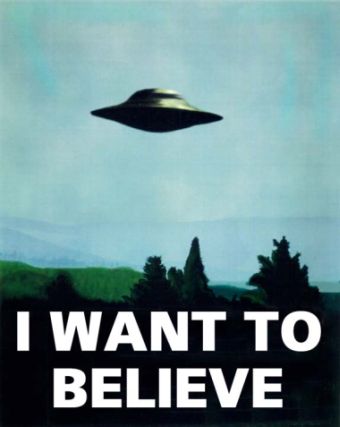
Ironically, however, in many cases such naivety reveals itself as just another form of dishonesty.  Americans know very well that their interests are not represented by the Democratic and Republican parties.  This plain fact is evidenced, for instance, in the prevalence of the argument in favor of the "lesser evil" between the two major parties by hucksters on both sides of the duopoly divide.  How then can we make sense of continued support for Democrats and Republicans by the American public?  Perhaps the simplest explanation is that such support is predicated on a willing suspension of disbelief.  Voters must ignore what they know to be true of political reality under the two-party state in order to justify their continued participation in the system.  They want to believe.  This was as apparent in the Obama campaign's "Believe in Change" slogan, as it is in the Tea Party's continued faith in the GOP.  In this way, people who know better sustain an ideological fiction that runs counter to their lived experience.

There is No Monopoly on Right: Contradiction and the Ideology of the Two-Party State

A commentary in the Mercury News by Byron Williams succinctly demonstrates the hubris, arrogance and intellectual bankruptcy of the ideology that sustains the two-party state.  Entitled, "To thrive, the nation needs two strong political parties," Williams's article takes a critical look at the weakness of the Republican party and its field of presidential candidates, and argues that this is not in the interests of the Democratic party either.  Excerpt:
With the current political process being what it is -- showing the qualities of a spectator sport -- it is also doubtful that many politically left of center will lose sleep over a weakened Republican Party. . .  My desires for a strong Republican Party assumes two things:  it is currently a weak party in need of self-reflection and purging; the Democratic Party is the de facto stronger of the two.

Being the "de facto" stronger political party, however, does not denote any moral superiority. If anything, it breeds an arrogance and hubris that lulls one into believing that "right" exist only within their domain, alleviating any desires for self-reflectionIn a two-party system, it requires that only one party be overtly infected by perceived weakness to send both tumbling into the abyss of mediocrity.  [Emphasis added.]
Of course, it is a cliche of bipartisan political sloganeering that no party has a monopoly on the truth, that no party is politically infallible, that no party is in possession of the fabled "silver bullet," and so on.  Williams explicitly subscribes to this hackneyed view.  His eventual conclusion, however, is quite revealing.  He writes:
It would be foolhardy to believe the answers to the problems we face are exclusive to one political party. For the nation to be successful, both political parties must aggressively compete in the marketplace of ideas.
So, according to Williams, it is foolhardy to believe that the answers to the problems we face are exclusive to one political party, but it is enlightened rationalism to believe that the answers to the problems we face are exclusive to two of them!  The two-party state breeds an arrogance and hubris among Democrats and Republicans which lulls them into believing that "right" exists only within their domain, alleviating any desires for critical self-reflection.  Indeed, Williams appears blissfully ignorant of the absurd contradiction inherent in his assertion that, though no party has a monopoly on right, the Democrats and Republicans have a monopoly on right.  The ideology of the two-party state is a nest of thoughtless contradictions.

An Unwitting Dialectic of the Two-Party State and Multi-Party Government

The ideology of the two-party state is a nest of contradictions.  When confronted with a thoroughgoing critique of two-party government, and a convincing case for the necessity of expanding the scope of political representation in the United States, the apologists of the ruling parties often fall back on a stock set of counterarguments.  Among the latter is the claim that the Republican-Democrat two-party state already effectively functions as a multi-party system.  Democrats and Republicans alike will point to the various sub-factions of the Democratic and Republican parties and say: "We already have a four party system!" or some such nonsense.  Consider a recent opinion piece by Washington Post columnist Michael Gerson, entitled "Three Party Government."  In the introduction, he writes:
As the budget process in Washington lurches from crisis to continuing resolution to debt limit scramble — with Congress seemingly incapable of dealing with fiscal issues without the prospect of immediate financial collapse — it is worth considering the structural reasons for this seriousness deficit. Some view the culprit as partisan polarization or the disproportionate power of Senate minorities — both of which play a role. But the main challenge is this: Our two-party system has produced a three-party government. [Emphasis added.] 
This assertion might come as something of a surprise to the millions of Americans who live in states where the two-party system has degenerated into one-party government, not to mention those who recognize that the Democratic and Republican parties are essentially unified in their opposition to representing the interests of the American people in accord with the nation's Constitution.  Nonetheless, Gerson argues that despite the split within the Republican party between the "tea party freshmen" and "mainstream Republicans," the GOP caucus in the Congress functions for all intents and purposes as a unified whole.  He then continues:
On fiscal issues, the Democratic Party is really two parties. One consists of European-style social democrats, represented by leaders such as Nancy Pelosi . . . The other Democratic Party is socially liberal and pro-business . . . 
This is, in other words, nothing more than the old split between the supposedly moderate "blue dogs" and the alleged "progressives" in the Democratic party.  Gerson asserts that this split is the source of the "third party" in the US Congress: the Republicans, the blue dog Democrats and the social Democrats.  Ironically, however, though Gerson spends the entirety of his column arguing that this effectively amounts to three-party government, he nonetheless concludes the exact opposite.  Excerpt:
Again and again, Democratic leaders have failed to produce budget approaches that unite 90 percent of their caucus. This is not entirely their fault. The ideological distance between social Democrats and pro-business Democrats is wider than any ideological gap on the Republican side. If pro-business Democrats were formally independent as a party, like the Liberal Democrats in Britain, they might be tempted to form a coalition government with Republicans — using their influence not only to block the proposals of social Democrats but to gain a share of power. But America’s two-party system doesn’t allow for this strategy.  [Emphasis added.]
So, according to Gerson, our two-party system has produced a three party government, but America's two-party system doesn't allow for such a thing.  Were there any reason to believe that someone like Gerson is what you'd call a "dialectical thinker," perhaps one would be inclined toward a charitable reading of the contradiction between his premise and his conclusion.  But it appears to be nothing more than the product of a rhetorical ploy, or maybe just plain laziness or sloppiness.

Despite Gerson, however, perhaps the contradiction is productive after all.  As the apologists of the two-party state themselves argue, the two-party system has effectively resulted in a kind of multi-party government, as evidenced by the various factions that constitute the Democratic and Republican party coalitions.  But, at the same time, it does not allow for the political expression and ultimate representation of these myriad competing interests – which are to be expected in a country as large and diverse as the United States –, because they are always and everywhere subordinated to the interests of the ruling parties themselves.  Political freedom and independence today begins with freedom and independence from the Democratic and Republican parties.

Toward a Taxonomy of Duopolist Talking Points: Countering the Ideologues of the Two-Party State

As election day approaches we are likely to see proponents of the two-party state publish more and more articles railing against third party and independent voting, against third party and independent candidates for office and against third party and independent politics as such.  Any thoroughgoing analysis of the ideology that underpins the two-party state and duopoly system of government would eventually have to produce a taxonomy of the duopolist ideologue's arguments against third party and independent political activism.  Longtime readers of Poli-Tea might recall any number of posts detailing the inconsistencies and weaknesses of the most common arguments put forward by partisan Democrats and Republicans to dissuade others from building a viable opposition to the tyranny of the Democratic-Republican two-party state and duopoly system of government.  For example:
the historical argument states that because many third party and independent candidates have been unsuccessful in the past, they will never be successful in the future
the tautological argument states that third party and independent candidates will never win an election because we have a two-party system
the spoiler argument presumes that a vote for a third party or independent candidate is a wasted vote
the procedural argument states that third party and independent candidates cannot win elections because the rules of the game are rigged against them
• the hysterical alarmist argument states that there is no time to build a third party or independent political movement because if we don't vote for a Democrat or Republican in the next election, we're all going to die
• and so on . . .
It might be rather interesting to construct a psycho-political profile of the duopolist ideologue from these various arguments.  One might easily conclude, for instance, that the proponent of the two-party state is:
• an historical determinist, a fatalist even;
• incapable of independently-minded critique of the antiquated institutional forms that dominate our politics;
• a reactionary eager to prop up the ruling party-political establishment;
• always on the lookout for a means of rationalizing his unwillingness or inability to declare his independence from the politics of the two-party state;
• a perennial political apocalypticist, without a historical sense
• and so on . . .
It may be helpful to keep these potential traits in mind when countering the ideologues of the two-party state.  The onslaught of 2010 is already in full swing.  Let's consider but two examples.  At the Orlando Tea Party, Judson Phillips demonstrates that this tea party group has effectively betrayed its historical namesake and allowed itself to become an appendage of the ruling political establishment.  Phillips' article does nothing more than regurgitate the talking points of the duopolist ideologue.  He writes:
within the tea-party movement there is a small but loud group calling on members not to vote Republican, but instead to vote for a third party, such as the Constitution Party or the American Independent Party. Those who call for tea-party people to vote for these third parties point out that the Republicans cannot be trusted. The last time the Republicans were in power, they were as bad as the Democrats. They are absolutely right . . .
Unfortunately, we have no alternative. . . . this is America. We have a two-party system. . . . For those who still support these third parties, let me point out that none of them has ever elected a senator, congressman or governor. I am not sure they have even gotten someone elected as dog catcher. . . . This year, we need to stop the Obama/Pelosi/Reid axis of fiscal evil. We do that by electing Republicans.
In the space of just a few hundred words, Phillips manages to hit no less than three of the arguments listed above:  the tautological argument (it's a two-party system), the historical argument (third parties have failed in the past) and the spoiler argument (a vote for a third party is a vote for Pelosi).  According to our profile, then, might one not conclude that Phillips is a reactionary historical determinist who is incapable of independent critique of the two-party state?  Moreover, Phillips reveals the difficulty of determining whether the ideologue of the two-party state is motivated by ignorance or malice.  He states outright that no third party "has ever elected a senator, congressman or governor."  Of course, this is patently false.  There have indeed been third party and independent senators, congressmen and governors.  Phillips is either completely ignorant of the matter at hand, namely, US political history, or he is consciously engaged in a dishonest and deceitful effort to rally support for one faction of the ruling political class.

For an example from the other side of the duopoly divide, take this recent article by Robert Parry at Consortium News, entitled "The Teach-the-Dems-a-Lesson' Myth."  Parry writes:
If my e-mail inbox is any indication, many American progressives plan to use the Nov. 2 election as an opportunity to “teach the Democrats a lesson” by either not voting or casting ballots for third parties, even if this contributes to the expected Republican (and Tea Party) landslide.

The thinking seems to be that the loss of the congressional majorities will punish the Democrats for accepting half-measures and compromises on issues from health care and financial reform to job stimulus and war. The Left’s hope apparently is that the chastened Democrats will then shift toward more progressive positions and be more assertive.

However, modern American political history tells us that this strategy never works. After the four key elections in which many progressives abandoned the governing Democrats – in 1968, 1980, 1994 and 2000 – not only did Republicans take U.S. politics further to the right, but the surviving Democrats tacked more to the center and grew more timid.
Parry's piece is thus an extended variation on the historical argument.  However, his choice of historical precedents is rather revealing.  Parry chooses to compare the 2010 elections with those of 1968, 1980, 1994 and 2000.  But only one of the latter is a so-called mid-term election, 1994.  In his discussion of the other three elections, Parry obviously focuses on the dynamics of the presidential race under consideration.  The flaw?  This is not a presidential election year.  Parry is a member of the cult of the executive that views all political antagonism and struggle through the prism of presidential politics.  In a response to Parry's piece, Digby from Hullabaloo provides us with an example of the type of pop-political psychology that is dominant among supporters of the corporate parties.  She argues that the opposition between Republicans and Democrats can be understood as some sort of metaphysical opposition between "the lovers and the fighters":
The two political tribes in America attract different kinds of people. Let's call them the Lovers and the Fighters. (I think you can figure out who's who.)  The majority of people in those tribes tend to react to pain differently. When the fighters feel pain they instinctively hit back. When the lovers feel pain they instinctively withdraw . . .  [etc.] . . .

Parry clearly lays out the case in his piece that this technique of "teaching the Democrats a lesson" has resulted in failure over and over again. They learn the opposite lesson we are seeking to teach them every time. And I guarantee you that once again, the lesson they will learn from this upcoming election will not be that they weren't liberal enough. 
What is striking about the latter passage, however, is how similar Digby's point is to that of Phillips above.  Phillips agreed that it is "absolutely right" to assert that "Republicans are as bad as Democrats," but concluded that "we have no alternative."  Similarly, Digby recognizes that attempts by liberal and left-wing activists to move the Democratic party in their favored direction have "resulted in failure over and over again," and that the Democrats will likely learn the "wrong lesson" once more.  But still, Digby continues to urge support for Democratic candidates. 

The likes of Phillips and Digby are equally incapable of liberating themselves from the ideology of the two-party state and both labor under the delusions propagated and promulgated by that very ideology.  Digby continues to believe that Democrats are the "liberal" party despite all evidence to the contrary, and, she presumes that she is a liberal despite the fact that she supports the Democrats, who, she agrees, are complicit with Republican in "taking US politics further to the right."  On the other hand, Phillips continues to believe that Republicans are the "conservative" party despite all evidence to the contrary, and, he presumes that he is a conservative despite the fact that he supports Republicans, who, he admits, are "just as bad as the Democrats."

I've said it before and I'll say it again:  the Democratic Party is not "liberal" and the Republican Party is not "conservative."  They cannot be.  They are the vehicles of the ruling corporate-political class in its ongoing war against constitutional government and the people of the United States.  If you support the Democratic Party, you are not liberal.  If you support the Republican Party, you are not conservative.  If you support the Democratic or Republican party, you are a reactionary supporter of the reigning corporatist state, and are providing popular cover for the ruling political class.  In other words, you are part of the problem.

Dear Democratic Voters, Follow Obama and Biden's Advice: Consider the Alternatives . . . Green, Socialist, Libertarian, Independent etc.

Clearly concerned about the so-called "enthusiasm gap" between likely Republican and likely Democratic voters, the White House has effectively begun a new campaign to shore up support for Democratic candidates among the party's most vocal activists, and, by extension, its base.  The explicit message of this campaign is highly counter-intuitive, at least at first glance.  Its slogan: "Consider the Alternatives!"  The message is difficult to ignore: in the White House echo chamber, the Vice President echoes the President echoing the Vice President.  As ABC News reports:
At a fundraiser in Manchester, NH, today, Vice President Biden urged Democrats to "remind our base constituency to stop whining and get out there and look at the alternatives. This President has done an incredible job. He’s kept his promises."

The remarks, made to roughly 200 top Democratic activists and donors, recall comments President Obama made last week to “griping and groaning Democrats…Folks: wake up. This is not some academic exercise. As Joe Biden put it, Don’t compare us to the Almighty, compare us to the alternative.”  [Emphases added.] 
Take a moment to consider the implications of the fact that the most prominent officials of the majority party are literally imploring Americans to "Consider the Alternatives." Of course, in the Orwellian language that is appropriate to the bizarro world of Democratic-Republican party politics and government, the statement "Consider the Alternatives" means exactly the opposite of what it says.  The implied message is immediately apparent: there are no alternatives, or rather, there is only one presumed alternative, voting Republican, but the presupposition is that this is simply not an option and therefore not an alternative.  But how does a partisan of the corporate parties understand the message?  At The Reaction, Michael Stickings writes in a letter to the Vice President:
What's with telling the Democratic base, your base, to "stop whining"?  Sure, I get your point -- as inartful as it was.

If you put Democrats up against Republicans, and if Democrats are compared to "the alternative," the choice should be clear, and Democrats, suffering from a lack of enthusiasm, should step up and do what needs to be done to prevent the Republicans from winning big this November.

In a two-party system, you've only got two choices, and often that choice is simply the least bad of the two. Is that what you meant? If so, and it would seem so, that's hardly a ringing endorsement of Democrats, hardly an encouraging message to be sending.  [Emphases added.]
Given the subtitle to The Reaction blog, namely, "liberalism unbound," it is highly ironic how succinctly this passage demonstrates the liberal Democrat's mental imprisonment by the ideology of the two-party state.  The reactionary ideologue of the two-party state thinks he has a choice when in fact there are no alternatives.  Indeed, partisans of the two-party state are so enthralled by the ideology that maintains it, they see two choices where in fact there are no alternatives.  

The good news is that there are numerous alternatives to the false choice between the Democratic and Republican parties that has been forced upon us by the ruling corporate-political class.  From a principled liberal or progressive perspective, independents, the Green party, the Socialist parties, even the Libertarian party, represent a superior alternative to the reproduction of the reigning two-party state.  If you call yourself a liberal or a progressive, but you support Democrats, in what sense are you a liberal or progressive?  By your actions you do nothing but provide popular political cover for a primary faction of the global warfare and corporate welfare state.

Democratic-Republican Party Government is Practical Political Nihilism: the Spirit of Party is Incompatible with Individualism and Collectivism

Partisans of the Republican and Democratic parties flatter themselves that the two-party state and duopoly system of government is, in one way or another, a concrete embodiment of an eternal struggle between world historical principles. In one of its most common forms, this conceit is framed as nothing less than an opposition between good and evil, in which the aims and goals of the political other are conceived as an evil that must be avoided at all costs and confronted at every turn, with the implication that this purely negative activity on one's own part is the very form and content of "fighting the good fight."

In another common variant, the opposition between the Democratic and Republican parties is framed as a grand struggle between competing philosophical visions of the nature of politics and government, distinguished by their respective emphases on the individual citizen or the aggregate social body, and by their reflexive positions regarding the proper role of government, its ideal size and scope etc. This presumption is shared by liberal Democrats and conservative Republicans alike, and thus constitutes a primary element of the common ideology that sustains the reigning two-party state and duopoly system of government. But what if the spirit of party that characterizes Democratic-Republican politics and government is incompatible with both individualism and collectivism?

Though they agree on little else, ideologues of the Democratic and Republican parties rarely disagree when it comes to affirming their own self-importance. At Hullabaloo, Digby describes the development of her political consciousness as a liberal Democrat in the following way:
I came to see American politics as an endless struggle between two big competing visions with progress being made by two steps forward one step back most of the time.
Her understanding of the interrelationship between the Democratic and Republican parties is strikingly similar to that of conservative Republicans such as Manly from Manly's Republic, who argues that the Democratic and Republican parties are the heirs of the great foundational debate between the Federalists and Anti-Federalists. He has written, for instance:
Americans are used to two major political parties because these represent the two differing approaches to the size and scope of the federal government.
At the Think 3 Institute, even Sam Wilson more or less tacitly accepts this general characterization of Democratic and Republican politics and ideology, though he explicitly states that the political and philosophical possibilities are not exhausted by the binary opposition. In a discussion of morality and democracy that is well worth reading in full, Sam writes:
we may as well recognize some kind of plurality of morality, with one morality placing an absolute priority on individual liberty, another on collective well-being, and others with different priorities.
Of course, an alleged concern for individual liberty and collective well-being on the part of the Republican and Democratic parties, respectively, is the result of nothing more than an abstraction from their rhetoric and common policy prescriptions. Because the GOP supposedly values individual liberty Republicans call for low taxes and small government. Because the Democratic party is supposedly concerned with the collective well-being of Americans, Democrats call for social programs and robust government. And this tension and opposition is seen as a decisive factor in the grand opposition between the ruling parties. In reality, however, it does little more than provide each side with the primary terms they employ in their criticism of the other: Republicans lambaste Democrats as totalitarian socialists and Democrats lambaste Republicans as individualist extremists.

The tragic irony is that Democratic-Republican party government results neither in the protection and expansion of individual liberty, nor in the effective establishment of and provision for our collective well-being. The reason for this is simple. The spirit of party that characterizes Democratic-Republican politics and government is incompatible with individualism and collectivism.

Insofar as a party mediates one's relation to government, society and fellow citizens, insofar as it serves as a mass vehicle for and medium of one's political activity, it is based on the negation of the individual through his or her subsumption into the mass of the organized group. On the other hand, even though it is a mass organization, a party is a necessarily partisan, sectional, political formation, which is thus predicated upon the negation of the collective in its totality, and therefore incapable of representing the social body as a whole.

Democratic-Republican party politics and government is based on the negation of the individual citizen and the collective social body. It is practical political nihilism. That nihilism is perfectly expressed by the bipartisan consensus in favor of the eternal reproduction and expansion of the global warfare and corporate welfare state over and against the expansion of individual liberty and the safeguarding of our collective well-being.

Political Psychology and the Perversion of Political Representation Under the Conditions of the Two-Party State

In a thought-provoking guest post at The Hankster, Evan considers "Party Politics from a Psychological Perspective." Relying upon C.G. Jung, Plato and the principles of modern physics, Evan argues that the way we conceive of human relations forms a primary foundation for what goes by the name of reality. He writes: "It should be a vital concern to inspect these foundations closely; for these relations just happen – and not until they are consciously considered can they be changed." In the politics of the reigning two-party state, Evan sees an instantiation of the ancient philosophical opposition between the One and its double, the Other. On the basis of Jung, he postulates the necessity of a third term that would disrupt the comfortable but discomforting equilibrium into which the system has settled:
Frequent attempts by the two-party system to keep a third party off the ballot in many states, the stagnation Congress represents as a result of such division, and the ineffectiveness of government in providing the individual with basic protections all conform to a general trend. . . .

our representatives are elected – but not unless they are first approved by the two parties. Our representatives are elected by the parties, and that is who they represent. Who is representing us? I think we will have to find an independent party for that.
Reading Evan's piece, I couldn't help but be reminded of the simplest taxonomy of political regimes, developed already by the ancient Greeks, according to the principles of the one, the few and the many, which distinguishes, of course, between monarchy, aristocracy and democracy. As has long been argued, the separation of powers in the United States makes for a mixed government that integrates aspects of all three of these forms. For instance, it takes no stretch of the imagination to construct an analogy between the executive branch and the monarchical principle, the judicial branch and the aristocratic principle, and the legislative branch and the democratic principle.

On such a view, the principles of the one, the few and the many thus stand in a reciprocal relation defined by the system of checks and balances between the President, the Supreme Court and the Congress. However, as Evan points out, the two-party system has so degraded the representative functions of government that the executive, the judiciary and the legislature effectively no longer stand for the people or the constitution of the United States, but rather have been put into the service of the party principle. In other words, the two-party system is slowly supplanting and degrading the separation of powers and the system of checks and balances that are supposed to be constitutive of our democratic republic.

This latter point is most clear in the highly dangerous and disturbingly common fabrication which asserts that the two-party system itself constitutes a system of "checks and balances." As I noted in my ten arguments against the two-party state, this claim confuses "an extra-constitutional political convention with the constitutional construction of the United States of America." It is thus a highly effective ideological weapon in the war being waged by the Democratic and Republican parties against the people and the constitution of the United States. The centralization and monopolization of political power by the Republican and Democratic parties is a grave threat to democratic-republican government. As Evan states: "Our representatives are elected by the parties, and that is who they represent. Who is representing us?" Who indeed?

The Political Class, the Country Class, and the Democratic-Republican Political Class War Against the People of the United States

In the American Spectator, Angelo M. Codevilla has published a lengthy article entitled "America's Ruling Class – And the Perils of Revolution" (link via Memeorandum). Codevilla argues that, over the course of the last hundred-plus years, the American people have become progressively alienated from their government, as the ruling political class has expanded in scope and power, to the benefit of the major party machines and entrenched elites. However, there is a noteworthy contradiction in Codevilla's conceptualization of the political class. The professor begins his essay with a reflection on the bailouts of the banking mafia in 2008:
The public objected immediately, by margins of three or four to one. When this majority discovered that virtually no one in a position of power in either party or with a national voice would take their objections seriously, that decisions about their money were being made in bipartisan backroom deals with interested parties, and that the laws on these matters were being voted by people who had not read them, the term "political class" came into use. . . . Republican and Democratic office holders and their retinues show a similar presumption to dominate and fewer differences in tastes, habits, opinions, and sources of income among one another than between both and the rest of the country. They think, look, and act as a class. [Emphasis added.]
The basis of his argument is thus that the political class is bipartisan in nature. Indeed, how could it be otherwise? The Democratic and Republican parties long ago hijacked the government of the United States and put it to work in the interests of the party machines and their financial benefactors, all of which is serviced by the deluded activists and bureaucrats who do their grunt labor. However, Codevilla goes on to argue that, though this class is bipartisan in nature, the Democratic Party is its primary vehicle:
while most of the voters who call themselves Democrats say that Democratic officials represent them well, only a fourth of the voters who identify themselves as Republicans tell pollsters that Republican officeholders represent them well. Hence officeholders, Democrats and Republicans, gladden the hearts of some one-third of the electorate -- most Democratic voters, plus a few Republicans. This means that Democratic politicians are the ruling class's prime legitimate representatives and that because Republican politicians are supported by only a fourth of their voters while the rest vote for them reluctantly, most are aspirants for a junior role in the ruling class. In short, the ruling class has a party, the Democrats. But some two-thirds of Americans -- a few Democratic voters, most Republican voters, and all independents -- lack a vehicle in electoral politics. Sooner or later, well or badly, that majority's demand for representation will be filled. [Emphasis added.]
According to Codevilla, then, the political class is comprised of the Democratic and Republican parties, but the Democratic Party is the party of the ruling class. Aside from the contradiction involved here, this conclusion is especially weak since one can read those very same poll numbers the other way around. The fact that more Americans have abandoned the Republican Party than the Democratic Party reveals that the Republican Party is now a naked vehicle for the ruling political class precisely because it lacks the political cover provided by popular support. On the other hand, Codevilla likely overestimates popular support for the Democratic Party; and, in any case, given his class-based analysis, should we not conclude that any popular support for the Democratic party is the result of false consciousness?

As Democrats currently hold the presidency and both houses of Congress, it is a trivial point that the Democratic Party is the primary tool and vehicle of the political class. But this is simply arbitrary. In the two-party state, whichever party holds the majority is the primary vehicle and tool of the ruling political class; it provides them with the political cover they need to wage their ongoing war against the people of the United States.

The opposing term in Codevilla's analysis is similarly plagued by contradiction, what he calls the 'country class,' that is, those of us who are not part and parcel of the ruling political class. Recall, of the political class, Codevilla states:
Republican and Democratic office holders and their retinues show a similar presumption to dominate and fewer differences in tastes, habits, opinions, and sources of income among one another than between both and the rest of the country. They think, look, and act as a class.
The professor admits the difficulty of describing the 'country class' at the outset:
Describing America's country class is problematic because it is so heterogeneous. It has no privileged podiums, and speaks with many voices, often inharmonious. It shares above all the desire to be rid of rulers it regards inept and haughty. It defines itself practically in terms of reflexive reaction against the rulers' defining ideas and proclivities . . . While the country class, like the ruling class, includes the professionally accomplished and the mediocre, geniuses and dolts, it is different because of its non-orientation to government and its members' yearning to rule themselves rather than be ruled by others.
In other words, based on the definition of class presented at the outset, the country class does not form a class at all, except insofar as its members are those who are not members of the political class. It is an almost purely reactionary-reactive formation without an active ordering principle, as Cordevilla himself states. How could it be appropriately represented by a party? The professor writes:
Certainly the country class lacks its own political vehicle -- and perhaps the coherence to establish one. In the short term at least, the country class has no alternative but to channel its political efforts through the Republican Party, which is eager for its support. But the Republican Party does not live to represent the country class.
In other words, the "country class" is forever doomed to support a faction of the ruling political class in the mistaken belief that this time around they will not be left in the lurch with a knife in their back. As I wrote back in February, in a post on the Democratic-Republican political class war against the people of the United States:
If someone were to write the definitive political fable of our time, it would likely tell the story of how farm animals formed alliances among themselves in support of the two competing factions from the management at the local slaughterhouse. The most tragic tale would be that of those creatures who knew they were being fattened for a feast, but simply couldn't help themselves every time they were thrown a bone.
Political freedom and independence today begins with freedom and independence from the Democratic-Republican two-party state and duopoly system of government. For the response of country class traitors on both sides of the duopoly divide to Codevilla's piece, see Riehl World View and Outside the Beltway.

The Populist Impulse and the Dialectical Defense of Democratic-Repulican Corporatist Government

The reinvigoration of the populist impulse in American politics has the potential to upend long-standing assumptions that form the basis of the cliches that pass for conventional wisdom among professional political commentators and liquidate the ossified structures that maintain the ruling balance of power in favor of the Democratic-Republican duopoly system of government. However, there is a grave danger that it will be appropriated by the partisans of the two-party state and put into the service of the political status quo. In two recent posts at the Think 3 Institute, Sam Wilson reflects on the reactions to what we might call the populist insurgency by commentators on both sides of the duopoly divide. In the first, he considers a piece by E.J. Dionne:
Liberal pundits would have people direct populist anger at the corporations who are momentarily expected to flood the airwaves with brainwashing propaganda. E. J. Dionne is a representative specimen. His latest column calls on Democrats to wage rhetorical war on corporate lobbyists and a "fake populism" that might be described as Teapublican. This "fake populism" focuses traditionally populist anti-"elite" hostility on the government instead of what Dionne deems its proper target, Wall Street.
In the second, Sam thinks through a column by David Brooks:
[Brooks notes that] that much of the supposed populism we see today doesn't come from the grass roots, but from the top down . . . As Brooks puts it: populists (or pseudo-populists) of both major parties "describe politics as a class struggle between the enlightened and the corrupt, the pure and the betrayers." Brooks is trying to warn both parties off the populist approach . . . When he describes the stupidity of 21st century populism, however, Brooks seems to be referring only to the anti-wealthy populism of liberals, progressives or Democrats, not the anti-"elitist" populism of Republicans, Tea Partiers and most conservatives. He does take a swipe at Sarah Palin's divisive populism, but his main beef against populism is over its fundamental hostility to concentrated wealth.
Though Sam considered these pieces separately, placing them side by side proves illuminating. Perhaps the simplest way to understand how Democratic-Republican politics channels the populist impulse to the benefit of the ruling order and the political status quo is to consider the ideological division of labor between the Democratic and Republican parties and the resulting dialectic. In the first moment, Democratic populists rail against the evils of big business while their Republican counterparts rail against the evils of big government. In the second moment, the partisan Republican construes Democratic populism as an implicit endorsement of big government while the partisan Democrat equates Republican populism with an implicit endorsement of big business. The outcome of this constellation is all too predictable. Because of their ideological investment in and political commitment to the ruling Democratic-Republican two-party state and duopoly system of government, Democratic-Republican populism necessarily devolves into its opposite: the elitist defense of big government and big business. The end result of this dialectic is the reproduction of the ruling order, which is characterized, above all else, by corporatist government, crony capitalism and political cronyism.

Rhetorical opposition to the reigning Democratic-Republican political status quo is quickly becoming a condition for the reproduction of the reigning Democratic-Republican political status-quo.
 
http://www.wikio.com