 Via RSS
 Via Twitter

The liberal elite identified as the dog wagging rump of the GOP have their counterparts in the Democratic party. Behind the facade of the Democrat/Republican division, is an elitist division playing both sides to its advantage. Remove the overlay of the existing party labels and what we see at work is the real two party contest, more accurately labeled the elitists and the populists.Part 2 deals with the history of the two-party state in the twentieth century and the rise of Barack Obama. Part 3 goes on to consider strategic possibilities for opposition to the ruling political class, specifically addressing the tea party movement:The populists are the de facto majority party. In a division of the house between the elitists and the populists, the elitists would lose routinely. In order to gain power, they must win the support of a sufficient number of populists to garner a voting majority. But if they do so frankly and openly, their populist allies would work against the stigma of being associated with elitism.
So the elite camp divides into two squadrons, each one assigned to forge an alliance with enough populists to achieve electoral success. One camp pretends to champion populist principles and values. The other pretends to champion the populist interest when it comes to the distribution of material goods. Meanwhile, in the background, both work to make sure that the elites protect and extend their power and control.
If, during eras of elite ascendancy, the two most visible parties are tools of elite manipulation, then there is at all times a third party involved in all our political activities. It is the populist party, normally divided against itself by successful elite manipulation. In terms of its potential, it is always the majority party. The notion that “third parties fail” is therefore less an observation of fact than a statement of elite intention. . . .Keyes has also written a kind of introductory or summary article to the series at World Net Daily.
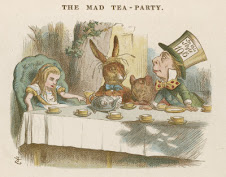
It’s existence “hides in plain sight” the elite acknowledgment that the third party is not a possibility but an ever-present reality. The Tea Party label signifies the ambiguity of its existential status. It’s the Party that is not a party. It allows acknowledgment of the unified activity of the populist element, but with an irony intended to keep it from achieving, or even effectively aiming to achieve, a political result consonant with its real political strength. Though united in opposition to both the elite contrived parties, it exists in a form intended to prevent it from engendering and rallying around any leadership truly independent of their control.
Though it looks back upon, and forward to betrayal by the GOP, that party is supposed nonetheless to offer the only effective outlet for its unifying revulsion against the subversive elite agenda brought fully to light by the arrogant haste of the Obama faction. Tragically, if the populist element simply accepts the GOP’s plainly treacherous offer, the best it can hope for is to exchange the reality of America’s populist constitution for the virtual reality substitute of playing in a speciously contrived political sandbox. . . .


