 Via RSS
 Via Twitter

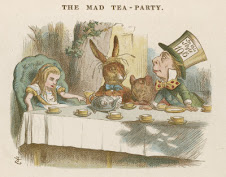
The long-shot candidate at the center of a Senate campaign spat yesterday dismissed the Democratic and Republican parties as “two sides of the same coin,” saying both had failed to address the two most pressing issues of the campaign.
Libertarian Joseph L. Kennedy’s remarks came as a spokesman for front-runner Martha Coakley, who won the Democratic nomination last Tuesday, welcomed his participation in upcoming debates - a proposal given a chilly reception by her Republican rival.
Kennedy, who is unrelated to the storied political clan, said the most important issues in the campaign were jobs and the economy . . .
“I’m not here to hide,” Kennedy said in an interview at a “Boston Tea Party” forum at Faneuil Hall, an event that drew about 100 spectators and focused on proposals to abolish the Federal Reserve and establish state militias and a new monetary system.
“I’m here because I have beliefs,” Kennedy said, maintaining that he should be included in debates between Coakley and state Sen. Scott Brown. Several organizations are planning debates, but have not yet invited Kennedy.
Libertarian: Democrats and Republicans are Two Sides of the Same Coin
The Boston Herald reports on recent appearances by independent libertarian candidate for US Senate in Massachusetts, Joe Kennedy, and highlights his campaign to be included in upcoming debates:

The Primary Focus of Independent Activism Should be the Election of Independent Activists
In an opinion piece for USA Today, Don Campbell calls on independents to "rise up" in 2010. Via The Hankster:
If there really is a surge of independents, it's the best political news of my lifetime because 2010 could be the year when unaffiliated voters systematically take ownership of elections . . . the best public service independents could perform in the next election cycle would be to force congressional candidates to drop the spin and talk straight about three overarching issues: the economy, national security and fiscal policy. That's it . . . the most intractable cycle in American politics is the re-election of congressional incumbents: Congress is a collection of bums — except for my representative, who's a dedicated public servant. That attitude helps explain why House members in the past 40 years have been re-elected nearly 95% of the time, on average, and except in a few dozen districts, have routinely received 60%-70% of the vote. This is where the independent can step in and help America break out of this rut . . . If independent activists can organize and affect the vote in just a handful of congressional districts, the political world will take notice . . . The time is right, and so is the plan: In 2010, the parties get to pick the candidates, but independents get to decide who wins.This does not go nearly far enough. Independents should not be wasting precious resources, time and money, only to "decide who wins" between the Republican and the Democrat in a given race, on the basis of the naive idea that candidates must be forced to "drop the spin" and "talk straight." Among Democrats and Republicans, "dropping the spin" and "talking straight" is just another rhetorical mechanism of the well-oiled spin machine. Such a strategy does nothing but reproduce political dependence on the duopoly parties. The primary focus of independent activism should be the election of independent activists.
The Definition of Political Insanity: Continuing to Elect Democrats and Republicans in the Expectation of Good Government
According to the old adage, the definition of insanity is doing the same thing over and over again and expecting different results. On this definition, Democratic-Republican politics is clearly insane, insofar as the standard Democratic and Republican responses to any given problem dictate employing strategies that have failed to solve that problem in the past. On this definition, it is equally insane to continue electing or otherwise supporting Democrats and Republicans under the expectation that the result would be anything other than a government by the ruling political class, for the ruling political class and of the ruling political class. It is thus not surprising that there is no accountability in US government and politics, as the insane are typically not held responsible for their actions. But that doesn't mean they should be allowed to run the asylum.
The dead-enders of the duopoly parties continue to advocate the election of Democrats and Republicans on the basis of a narrow partisan apprehension of the political problem facing the people of the United States. Thus the Republican asserts that Democratic policies are the root of all political evil, while the Democrat asserts the same regarding the Republicans. But the political problem facing the people of the United States is greater than either the Republican or Democratic Parties, it is Democratic-Republican politics as such, the duopoly system of government and the two-party state. As both Republicans and Democrats are invested and implicated in the reproduction of this problem, they are incapable of addressing it. Indeed, as with so many other things, they can only be trusted to exacerbate it.
The dead-enders of the duopoly parties continue to advocate the election of Democrats and Republicans on the basis of a narrow partisan apprehension of the political problem facing the people of the United States. Thus the Republican asserts that Democratic policies are the root of all political evil, while the Democrat asserts the same regarding the Republicans. But the political problem facing the people of the United States is greater than either the Republican or Democratic Parties, it is Democratic-Republican politics as such, the duopoly system of government and the two-party state. As both Republicans and Democrats are invested and implicated in the reproduction of this problem, they are incapable of addressing it. Indeed, as with so many other things, they can only be trusted to exacerbate it.
The Two-Party System Guarantees Political Corruption and the Abuse of Power
An AP article out of Idaho profiles Keith Allred, who has announced that he will be seeking the Democratic nomination for governor of the Gem State in 2010. As usual, the article is careful to exclude mention of any third party or independent candidate for the office:
If Allred wins the 2010 Democratic primary in May, he would face the winner of the Republican primary. GOP candidates include front-runner Gov. C.L. "Butch" Otter, Ada County Commissioner Sharon Ullman and former elk rancher Rex Rammell.Yet there are already at least two independent candidates for governor of Idaho in 2010: Jana Kemp and Pro-Life Richardson. The AP piece quotes a former Democratic governor of the state, Cecil Andrus, talking up the virtues of the two-party system:
Cecil Andrus, a former four-term Democratic governor, applauded Allred's run, saying Democrats haven't held the post since Andrus left office in 1995. "Keith is extremely knowledgeable about the issues and he knows Idaho," Andrus said in an e-mail from the state Democratic Party. "Most Idahoans know that a strong two-party system makes for better government and a more balanced approach to solving problems." [Emphasis added.]
Such statements are good for a laugh, but the joke is on those who continue to believe the propagandistic proclamations of duopolist ideologues. Consider the situation, for instance, in the state of Georgia, where the Republican Speaker of the House, Glenn Richardson, will soon be resigning after it was revealed that the "family values" conservative had been carrying on an affair with a lobbyist. Richardson "helped engineer the 2004 Republican takeover of the House, becoming the first GOP House speaker in Georgia in 134 years." In an opinion piece for the Atlanta Journal Constitution reflecting on the scandal, the former executive director of the Georgia GOP, Lee Raudonis, notes that the two-party system clearly does not make for better government:
The proposition that a "strong two-party system makes for better government," as is alleged by duopolist ideologues and Democratic-Republican partisans of the two-party system, is demonstrably false. Indeed, it would not be much of an exaggeration to propose that the two-party system guarantees political corruption and the abuse of power. The proof is the abject degeneracy and corruption of the reigning two-party state. A primary aim of independent and third party politics should be the dismantling of the Democratic-Republican corporate corruptocracy.The announcement that Georgia’s first Republican speaker of the House since Reconstruction is resigning in January causes me to wonder if a lot of work by a lot of people to help make Georgia a two-party state actually achieved the results we were seeking. After all, one of the primary objectives of creating a viable two-party system was to bring an end to the abuse of power by a few ultra-powerful legislators . . .
The perceived abuses of power by . . . Democrats was one of the great motivators for candidates and party loyalists to work extra hard to elect more and more Republicans. Eventually, in the year 2002, Republicans won a majority in the state Senate and two years later, a majority in the state House. We were convinced that once in power, Republicans — who understood firsthand what it was like to be in a minority position and campaigned aggressively against the abusive use of power — would make sure that none of their leaders abused their power.
Oops, I guess we were wrong. A competitive two-party system clearly does not guarantee that those in the majority will not abuse their power. Our soon-to-be former speaker proved that.
Independent Progressive Opposition to the Democratic-Republican Party Coalition
In a reader commentary for the Berkeley Daily Planet, Harry Brill makes the case for independent progressive opposition to the ruling Democratic-Republican coalition:
To defeat conservatives in the Democratic or Republican party, we should nurture and support candidates that are not affiliated with either party, whether they run as independents or third party candidates. Failing to do that robs us of any leverage because the party leadership realizes we have nowhere else to go. The proposal being made here is not to permanently desert the Democratic Party. Rather, our commitment should be conditional to assure that the Party pays more attention to progressives than to the corporate community.Meanwhile, in an Open Letter to the Progressive Community at the Independent Progressive Politics Network we read:
In the Bay Area there are several Democratic Party clubs doing very useful work on issues and in supporting progressive candidates in the primaries. But there is a serious shortcoming. If a local Democratic Party organization supports a non-Democrat over a Democratic Party candidate, its charter could be revoked. So Goliath continues to enjoy an important advantage because David is deprived of a sling shot. But there is nothing to stop members of Democratic Party clubs from working outside their clubs on behalf of progressive candidates. We also have to figure out how to undermine the institutional bribery that influences voting patterns in the House and Senate. The Washington D.C. based institute, Public Citizen, found that since 1998, 43 percent of all members of Congress who left office returned as lobbyists.
The current laws on the books prohibit members of congress and staff from taking lobbying jobs immediately after they leave Congress. But as the record shows, these weak laws have been easily circumvented. Vigorous efforts have to be made to continually expose the problem to the public.
We who are signing this Open Letter affirm our intention to continue working locally, statewide, regionally and nationally to strengthen efforts for independent political action, efforts that are under the control of neither the Republican nor the Democratic Party. The old arguments about “just stick with the Democrats for now” have shown themselves to be wrong. How many times do progressive issues need to be ignored or suppressed by Democratic leaders before a critical mass of U.S. progressives join forces to build something very different?
We are not saying that we believe we should have no connection or relationship with Democratic (and Republican) elected officials. As progressive organizers we need to build strong, mass-based organizations based on principled relationships but which also build power and mount campaigns, both on issues and to get the best possible people in office. We need to aggressively lobby and hold accountable those in office . . .
We wish we had a political system that gave voters a wide range of choices and made it possible to vote for the best candidates without being afraid of getting the worst elected. Until we get such a system, on local, state and federal levels, progressives will have differences over tactics when it comes to support of “third party” candidates vs. support of Democrats. We believe that these are differences that should be tolerated and be a continuing topic of discussion, while we join together in support of a strong progressive platform and a commitment to serious and sustained, grassroots-based, independent movement building.
Democratic Utopianism and Liberal Disillusionment
Though Tom Jensen at Public Policy Polling states that "liberal unhappiness with Barack Obama is still largely anecdotal and not very widespread," the anecdotal evidence is spread throughout the liberal-progressive web. At FDL's The Seminal, Jeff Morris provides his take on the Democrats' bailout of the medical insurance industry, otherwise known as the health care reform bill, which is making its way through the Senate:
If this is the final bill, I’m done with the Democratic party. It will be third party time for me. The House and Senate Democrats are making fools of themselves by compromising the bill to the point where it isn’t worth passing . . . If you pass a watered down worthless compromise of a final bill, I and I believe many others, will be done with you for any future support or votes for your party and its candidates.At the Daily Kos, Kos writes:
The administration may be happy to declare victory with a mandate that enriches insurance companies, yet creates little incentive to control costs or change the very business practices that have screwed so many people. But I'll pass. Democrats are demoralized, and have little incentive to turn out next year.Yet, many liberals continue to believe that the Democratic Party stands for something other than the maintenance of the global warfare and corporate welfare state. They do this against all the evidence and their better judgment. At Planet POV, Chernynkaya states:
When you get right down to it, I am a Democrat, in agreement with what the Democratic Party stands for . . . So I don’t need a Third Party as long as my Party stays true to its platform. And that’s the problem; too many haven’t. How do we make them?Until Americans declare their political independence from the Democratic and Republican Parties, they will continue to be held hostage by the party machines and the interests they represent, which are diametrically opposed to the interests of the American people. At Alternet Joe Bageant asks "the hope and change crowd – how's that working out for you?":
Obama's public approval ratings are taking a beating. Millions of his former cult members have awakened with a splitting hangover . . .This frustrating ping pong game in which the margin of first time, disenchanted and undecided voters are batted back and forth has become the whole of American elections. That makes both the Republican and Democratic parties very happy, since it keeps the game down to fighting the enemy they know, each other, as opposed to being forced to deal with the real issues, or worse yet, an independent or third party candidate who might have a solution or two.
Thus, the game is limited to two players between two corporate parties. One is the Republican Party, which believes we should hand over our lives and resources directly to the local Chamber of Commerce, so the chamber can deliver them to the big corporations. The other, the Democratic Party, believes we should hand our lives and resources to a Democratic administration -- so it alone can deliver our asses to the big dogs who own the country. In the big picture it's always about who gets to deliver the money to the Wall Street hyena pack. Americans may be starting to get the big picture about politics, money and corporate power. But I doubt it.
The Socialist Worker, however, sees "sparks of resistance in the labor movement":
After a grim year for organized labor, those committed to class-struggle unionism can find a few good reasons to be cheerful this holiday season. At the top of the list are strike victories by Philadelphia transit employees and University of Illinois graduate employees, a "no" vote on major contract concessions at Ford, and election victories by reformers in transit and Teamster union locals in New York City.
Nonetheless, you really have to wonder about those people who continue to think that the Democratic and Republican Parties are capable of representing anything other than the perverted interests of the political class and the financial oligarchy that supports them.
On the Failure of Democratic-Socialist Strategy and the Advocacy of Its Emulation by Republican Strategists
A popular talking point for demagogic Republican partisans of the two-party state is that the Democratic Party has been overrun by socialists, communists, Marxist-Leninists etc. Outside conservative and Republican circles this claim is, naturally, not taken very seriously in the mainstream. At the same time, however, the leadership of the Communist Party USA have been vocal supporters of the Obama administration and the Democratic majority in Congress, despite the opposition of the party's rank and file (see, for instance, Obama and the Crisis of the Communist Party). There is also historical evidence for the claim. Consider the findings of the article I excerpted in my last post on the third party tradition in American politics. In The Decline of Third Party Voting in the United States, Hirano and Snyder found:
Perhaps the most interesting aspect of today's conservative Republican denunciations of the "socialists" and "communists" in the Democratic Party is not their derision of specific "socialist" or "communist" policies but rather their fascination with "socialist" and "communist" political strategy. More than one Red State diarist has suggested that Republicans follow the infiltrationist strategy allegedly implemented by radical socialists in the 1970's. Glenn Beck has stated that the people of the United States need to begin "thinking like the Chinese." And none other than Rush Limbaugh has argued that conservatives should emulate the "radical left":
It may be asserted that the Democrats are implementing policies worthy of a corrupt Communist regime – let's say, for instance, the bank and auto bailouts, warrantless wiretapping etc. – but many of these are hold-overs from the previous Republican administration. Therefore, either the Republican Party is also overrun with communists or the Democrats are not implementing communist policies. But it is entirely clear that the Democrats do not even advocate left-wing policies (for instance, universal single-payer health care, which is supported by the Communist, Socialist and Green Parties), but rather utilize these policy positions as bargaining chips in a debate decided by subsidiaries of national and multi-national corporations and industries (i.e. Democratic and Republican politicians). Indeed, it is absurd to argue that the Democratic and Republican Parties have implemented communist or socialist policy if only because in the United States corporations are not owned by the government, rather the government is owned by corporations.
Consider, then, the irony of the fact that Republican ideologues are not only advocating that conservatives and libertarians emulate socialist and crypto-communist political strategy, but they are advocating the emulation of a failed socialist and crypto-communist political strategy, and calling it a return to the spirit of the founding fathers!
evidence consistent with the claim that electoral support for third parties – mainly left-wing third parties – declined because the Democratic Party co-opted the left-wing policy position beginning with the passage of the New Deal agenda.H&S offered at least two pieces of evidence in support of this position: the decline in support for left-wing third parties roughly corresponded with the rise in support for the Democratic Party during and after the New Deal; and a non-trivial number of left wing third party candidates for office before the New Deal could be found running in Democratic primaries or running for office as Democrats following the New Deal. One could interpret this movement in a number of ways: 1) the Democratic Party co-opted the policy positions of left-wing third parties thus attracting left-wing third party voters and activists; and perhaps, if one is more conspiratorially minded, 2) left-wing third party activists infiltrated the Democratic Party thus forcing a leftward shift in its policy platform.
Perhaps the most interesting aspect of today's conservative Republican denunciations of the "socialists" and "communists" in the Democratic Party is not their derision of specific "socialist" or "communist" policies but rather their fascination with "socialist" and "communist" political strategy. More than one Red State diarist has suggested that Republicans follow the infiltrationist strategy allegedly implemented by radical socialists in the 1970's. Glenn Beck has stated that the people of the United States need to begin "thinking like the Chinese." And none other than Rush Limbaugh has argued that conservatives should emulate the "radical left":
conservatism is on the ascendancy, it's actually good to be a conservative, and this is the time to reassert control over the Republican Party. It's not going to be easy but the Democrats, the far left didn't go out and form a third party. They took over the Democrat Party.One would think that supposed conservatives would choose better political role-models for themselves. Nonetheless, this has become a popular argument among Republican partisans of the two-party state who seek to dissuade conservatives and libertarians from engaging in third party and independent political activism. However, the argument is based on a number of false premises, for instance, that socialists and communists successfully infiltrated the Democratic Party, and that Democrats therefore advocate communist and socialist policies.
It may be asserted that the Democrats are implementing policies worthy of a corrupt Communist regime – let's say, for instance, the bank and auto bailouts, warrantless wiretapping etc. – but many of these are hold-overs from the previous Republican administration. Therefore, either the Republican Party is also overrun with communists or the Democrats are not implementing communist policies. But it is entirely clear that the Democrats do not even advocate left-wing policies (for instance, universal single-payer health care, which is supported by the Communist, Socialist and Green Parties), but rather utilize these policy positions as bargaining chips in a debate decided by subsidiaries of national and multi-national corporations and industries (i.e. Democratic and Republican politicians). Indeed, it is absurd to argue that the Democratic and Republican Parties have implemented communist or socialist policy if only because in the United States corporations are not owned by the government, rather the government is owned by corporations.
Consider, then, the irony of the fact that Republican ideologues are not only advocating that conservatives and libertarians emulate socialist and crypto-communist political strategy, but they are advocating the emulation of a failed socialist and crypto-communist political strategy, and calling it a return to the spirit of the founding fathers!
Primary Farce: Low Voter Turnout in MA Senate Primary a Crisis of Government, an Opportunity for the Opposition
Reports on the US Senate primary elections to fill the seat of the late Ted Kennedy in Massachusetts uniformly emphasize the lack of voter participation. TPMDC writes:
Turnout in today's Democratic primary for the Massachusetts special election for Senate -- tantamount to election for Ted Kennedy's seat, in this deep-blue state -- is turning out to be astonishingly low . . . as of 3 p.m. ET, only 35,000 people had voted in Boston, less than 10% of the city's registered voters.At WikiNews, we read:
Massachusetts Secretary of the Commonwealth William F. Galvin said that he expected turn out to be "very light" with 500,000 to 900,000 voters out of Massachusetts 4.1 million registered voters participating. He added that the turnout would be much closer to "to the 5 than to the 9." Galvin further noted that turnout would mostly consist of Democrat and Republican voters and not independents noting that, "My instinct is that the independents are not participating."In other words, as many as 7 or 8 out of every 10 voters in Massachusetts could not be bothered to cast a ballot for any of the candidates being floated by the Democratic or Republican Parties. At what point do we admit that officials – and even entire governments – elected with such thin support from the public are simply illegitimate? Some of us already have. Bad Karma writes:
i'm having a good chuckle reading all the party faithful gnashing their teeth over their "get out and vote" plea today. the turnout is dismal, and i, for one, couldn't be more encouraged. after all, this is NOT an election--it's a party primary--a private function for the people who are screwing our nation, and screwing it very, very badly. worst of all, it's a soiree that's being paid for by *all* of us, to complete the travesty . . . the only thing these "two" parties, who are really only two sides of one, are for, is anything to advance their own agendas and ideologies of graft and corruption and denial of personal liberties. so it's no wonder to me that nobody but nobody wants to vote for adherents of either crime syndicate.However, in the special election to be held on January 19, 2010, Massachusetts voters will not be stuck with the false choice between a Republican and a Democrat. Earlier this week, independent libertarian candidate Joe Kennedy (no relation to Ted) completed the signature requirements necessary to get his name on the ballot. If the primary vote is any indication of participation in the election to come, Kennedy need only garner the active support of 1 or 2 in 10 voters to come out on top in the contest.
The Democratic Party is the Face of the Global Warfare and Corporate Welfare State
At TruthDig, Chris Hedges argues that "liberals are useless" and makes the case against any progressive alliance with the Democratic Party:
Liberals are a useless lot. They talk about peace and do nothing to challenge our permanent war economy. They claim to support the working class, and vote for candidates that glibly defend the North American Free Trade Agreement. They insist they believe in welfare, the right to organize, universal health care and a host of other socially progressive causes, and will not risk stepping out of the mainstream to fight for them . . .Naturally, partisans of the Democratic Party and the duopoly system of government do not look kindly upon principled left-wing criticism of their continuing support for the ruling parties and the corresponding global warfare and corporate welfare state. At firedoglake, Blue Texan is unable to marshal anything other than the old lesser-of-two-evils argument in favor of Obama, demonstrating the absolute moral bankruptcy of establishmentarian liberal progressivism:
I am not disappointed in Obama. I don’t feel betrayed. I don’t wonder when he is going to be Obama. I did not vote for the man. I vote socialist, which in my case meant Ralph Nader, but could have meant Cynthia McKinney. How can an organization with the oxymoronic title Progressives for Obama even exist? Liberal groups like these make political satire obsolete. Obama was and is a brand. He is a product of the Chicago political machine . . .
Anyone who says he or she cares about the working class in this country should have walked out on the Democratic Party in 1994 with the passage of NAFTA. And it has only been downhill since. If welfare reform, the 1999 Financial Services Modernization Act, which gutted the 1933 Glass-Steagall Act—designed to prevent the kind of banking crisis we are now undergoing—and the craven decision by the Democratic Congress to continue to fund and expand our imperial wars were not enough to make you revolt, how about the refusal to restore habeas corpus, end torture in our offshore penal colonies, abolish George W. Bush’s secrecy laws or halt the warrantless wiretapping and monitoring of American citizens? The imperial projects and the corporate state have not altered under Obama. The state kills as ruthlessly and indiscriminately in Iraq, Afghanistan and Pakistan as it did under Bush. It steals from the U.S. treasury as rapaciously to enrich the corporate elite. It, too, bows before the conservative Israel lobby, refuses to enact serious environmental or health care reform, regulate Wall Street, end our relationship with private mercenary contractors or stop handing obscene sums of money, some $1 trillion a year, to the military and arms industry. At what point do we stop being a doormat? At what point do we fight back?
Does Hedges really believe the country would look no different today if the Supreme Court hadn’t appointed Bush in 2000? Because I think he’s wrong. Similarly, does anyone think John McCain would have overturned the Bush policy on stem cells, acknowledged the seriousness of climate change, spent a huge amount of political capital trying to reform health care, reversed Bush’s policies on labor, on the environment, or endangered species? Does anyone think John McCain would’ve nominated Sonia Sotomayor for the Supreme Court or signed the stimulus bill?Rather than waste time engaging Blue Texan directly, perhaps it makes more sense simply to lay bare the hypocrisy of liberal Democratic lesser-evilism. At Boiling Frogs, Sibel Edmonds points out:
Many referred to the previous administration’s figureheads as evil; many of us would find that aptly put and easily justified. After all, they sanctioned torture practices, extraordinary rendition, and world-wide assassinations; they took away civil liberties and put in place police practices ironically named the Patriot Act; they increased secrecy and decreased (ceased) accountability; they established untouchability and granted themselves immunity fit for kings, such as the State Secrets Privilege invocations; they spied on and illegally wiretapped Americans with no cause or oversight; they lied and engaged in preemptive wars . . .
Do we all agree with the evilness of all the practices mentioned above? Then, let’s be honest with ourselves, and let’s objectively plug in the same standards to the man who was marketed and sold to us by the establishment and its media tentacles as the ‘candidate of change, for change’:
The Obama Administration has agreed with and continued the Bush Administration’s illegal domestic wiretap practices. They have granted immunity to all involved in these unconstitutional and police state practices.
The Obama Administration has granted immunity to all criminals who’ve been engaged in illegal renditions and torture practices.
The Obama Administration has continued the previous administration’s secrecy practices, including the invocation of State Secrets Privilege, and the Executive Branch’s immunity from judicial oversight.
The Obama Administration has condoned and promoted the previous administration’s assault on American’s liberties through the Patriot Act.
The Obama Administration has fought against any rights for national security whistleblowers and blocked the passage of legislation attempting to grant protections to those who expose Executive branch criminality, waste, and abuse . . .
Last year, during the final stages of the primaries and the elections, I stood almost alone. I knew candidate Obama’s track record, which told me pretty much all I needed to know; that there weren’t going to be any changes, if not those for the worse . . . I did not waste my vote on Obama or McCain.There is no place for opponents of the global warfare and corporate welfare state inside either of the ruling parties because there is no opposition to the two-party state inside the two-party state. In related news, the Green Party has announced an "emergency" anti-war rally for this Saturday in Lafayette Park to oppose the Democrats' escalation of the war in central Asia, stating, "we promise intensified opposition, with anti-war candidates prepared to defeat his war policy."
Third Party Tea Party: Independence or Co-dependence?
A new poll from Rasmussen presented respondents with a three-way generic ballot test, asking them to choose between Democrats, Republicans and a Tea Party candidate. The generic third party tea party candidate came in second place:
In a three-way Generic Ballot test, the latest Rasmussen Reports national telephone survey finds Democrats attracting 36% of the vote. The Tea Party candidate picks up 23%, and Republicans finish third at 18%. Another 22% are undecided.
Among voters not affiliated with either major party, the Tea Party comes out on top. Thirty-three percent (33%) prefer the Tea Party candidate, and 30% are undecided. Twenty-five percent (25%) would vote for a Democrat, and just 12% prefer the GOP.
Among Republican voters, 39% say they’d vote for the GOP candidate, but 33% favor the Tea Party option.
The poll also found that a large plurality of voters desire a third party:
Forty-one percent (41%) of all voters nationwide say Republicans and Democrats are so much alike that a new party is needed to represent the American people. Republicans are evenly divided on this question, while Democrats overwhelmingly disagree. However, among those not affiliated with either major party, 60% agree that a new party is needed, and only 25% disagree. Men are far more likely than women to believe a new party is needed. [Emphasis added.]Consider duopolist Republican ideologue Ed Morrissey's take on these findings at Hot Air:
Fortunately, there is no such thing as a Tea Party, er, Party, which Rasmussen asked respondents to assume when answering this survey. It would take too long to form such a party, and as the results above show, it would be a self-defeating process, especially in 2010. This reflects the damage done to the GOP during 2001-6, when voters thought they were electing small-government, fiscal-restraint politicians, and wound up instead with porkers who spent hand over fist. [Emphasis added.]Morrissey's solution to the problem faced by the GOP is quite telling:
The key in 2010 is to have the GOP represent the Tea Party brand, and the only way to do that is to firmly insist on fiscal restrain and reduction of government as the platform for the election. The Right needs to put aside all of its usual hobby horses and focus on the message from the Tea Party movement. If they need an excuse, call it a moment of national crisis as the Democrats attempt a takeover of the health-care and energy industries.It is difficult to imagine a more cynical political ploy than that which is proposed here. Morrissey admits that the problem with the Republican Party is that they say they stand for small government and fiscal restraint but do not in reality act in line with that rhetoric. His proposed response is not fiscal discipline, the limitation of government and the expansion of freedom, but rather a "rebranding" campaign bolstered by alarmist hysterics, the declaration of a national crisis. This is a call for nothing but more of the same. And thus Morrissey is nothing but a craven apologist for the political status quo. It is no coincidence that his position stands upon the three pillars of duopoly ideology that I outlined back in October: historical fatalsim (third party activity is "a self-defeating process"), hysterical alarmism (it's a "national crisis") and political impatience (it would "take too long" to build a third party). Ironically, in actuality, continuing to support Republicans and Democrats in the hope that one day they will act in accordance with their rhetoric or the Constitution is a self-defeating process; it is already too late to reform either of the major parties, indeed, there is little if anything in them worth salvaging rather than ravaging; and the dictatorship of the Democratic-Republican Party is the greatest political crisis facing the people of the United States.
On Victory: To Defeat the Democratic or Republican Party You Have to Defeat Both the Republican and Democratic Parties
Yesterday, I wrote that "it is a mystical dogma of duopolist ideology that the two-party system is a quasi-eternal condition of politics as such." Among partisans of the reigning duopoly form, this mystical dogma goes by the name of realism. Its primary function is to transform discontent with the dictatorship of the Democratic-Republican Party into support for one of its factions via the illusion of opposition to the other. Among partisans of the duopoly parties, it is everywhere admitted that the election of Democrats is secondary to the goal of defeating Republicans and that the election of Republicans is secondary to the goal of defeating the Democrats. But the Democrats cannot be defeated by the Republicans and the Republicans cannot be defeated by the Democrats as each is a condition for the existence of the other. To defeat the Democrats the Republicans have to be defeated too. To defeat the Republicans, the Democrats have to be defeated as well. The only practical effect of duopolist realism is the reproduction of the problem that is the ruling two-party state. The only practical solution to this problem is declaring one's independence from the Democratic and Republican Parties.
Consider a recent post by A Conservative Teacher entitled "US Has a Two-Party System – Deal With It and Vote Republican." The piece begins:
Consider a recent post by A Conservative Teacher entitled "US Has a Two-Party System – Deal With It and Vote Republican." The piece begins:
The United States of America has a two party system and it always will . . . Every election people wish that another different party would win, but they very rarely do. And that is the way it is.Arguably, in the modern era, fatalistic determinism of this sort was first discredited by Scottish philosopher David Hume in his Enquiry Concerning Human Understanding from 1748. Hume wrote:
That the sun will not rise to-morrow is no less intelligible a proposition, and implies no more contradiction than the affirmation that it will rise.Conservative Teacher continues by offering a series of arguments with which we're already quite familiar, as they are the stock-in-trade of duopoly ideology. First, the spoiler argument:
The biggest role that 'third parties' play in our system is throwing the election to the 'other side'- all of those people who voted Libertarian helped the opposite of a libertarian win, all of those who thought HW Bush wasn't conservative enough and voted Perot helped put Clinton in office . . . And all of you who read my blog that support and vote third party, all you are doing is helping put communists, socialist, and fascists in office. And that is the way it is.The spoiler argument is, of course, a double-edged sword: all those folks who voted for H.W. Bush rather than Perot handed Clinton the election; all those people who supported Al Gore over Ralph Nader allowed Bush to win. In reality, it is those who support Democrats and Republicans who have voted "communists, socialists and fascists in[to] office." That's just the way it is. Since Godwin's Law has already been implicitly instantiated here, let's continue in this vein for a moment: if Democrats are socialists, as A Conservative Teacher implies, and Republicans are, say, nationalists, as their stated ideology would suggest we conclude, well then, it would seem that the Democratic-Republican two-party state is a National Socialist state. No? Conservative Teacher goes on to provide a series of reasons for the existence of this two-party state:
One is tradition and history- we've always had a two party system . . . Another reason we have a two-party system is the laws and regulations that we have put in place to control elections favor two parties . . . Another reason is because Americans are generally moderate, and the two major parties are coalition parties that make compromises to win.Of course, the United States does not have any "party system" whatsoever, as none is mandated by the Constitution. Furthermore, as long as there have been two major parties, there have been minor parties and alternatives to the continued exploitation of the people of the United States by the nation's ruling elites. In effect, we've always had a multi-party system. It is thus no coincidence that the "laws and regulations" that "control elections" favor the two-party state, it is in this way that Democrats and Republicans have institutionalized the dictatorship of the Democratic-Republican Party and ensure their continued control over virtually all aspects of government in the United States, though taken together Democrats and Republicans barely constitute a majority of the population if they constitute one at all. Conservative Teacher's final point refutes itself. The claim that the major parties need to compromise to win over moderates is contradicted by the assertion that the Democratic Party is controlled by radicals:
the two major parties are coalition parties that make compromises to win, which moves them both closer to the middle, which means that other parties only have room to win supporters on the margins of the political spectrum, where there are fewer people. And this is why you personally (if you vote third party) are messing up. The GOP is a coalition party that in order to win brings in lots of groups and combines them in an imperfect manner. The Democrat party does this too, and all of the communists and fascists got smart and joined that party and now run our nation, while all of the conservatives and libertarians sit on their high horses and judge and that's why the communists and fascists run our nation. You (if you vote third party) are contributing personally to the downfall of the United States of America. [Emphasis added.]Actually, as they control all branches of government at all levels of government, it is none other than Republicans and Democrats that are responsible for "the downfall of the United States," if that is in fact what we are witnessing today. As a general rule of thumb, we can state with some degree of confidence that the typical Democratic-Republican response to a given problem requires confronting that problem with strategies that have failed to solve it in the past. So it is with the problem of the Democratic and Republican Parties themselves. Independent and third party politics aims first and foremost at ceasing to reproduce this problem.
The Choice is Clear: Independence from the Democratic-Republican Party or Subjugation by the Democratic-Republican Party?
Perhaps the only thing ideologues of the Republican and Democratic Parties fear more than one another are credible independent and third party challenges to the two-party political status quo. Though it is a mystical dogma of duopolist ideology that the two-party system is a quasi-eternal condition of politics as such, does not the palpable fear of an active, engaged and independent citizenry among partisans of the Democratic-Republican Party reveal the fragility of the reigning two-party state and the duopoly system of government? At America Blog, Democratic huckster John Aravosis worries that in 2010 progressives and liberals will act on the knowledge that the Democratic Party, like the Republican Party, stands for nothing other than the reproduction of the the global warfare and corporate welfare state:
Democrats may not vote for Republicans. But in their minds they'll assume the Dems will retain power even without their vote - after all, most people think that an individual vote doesn't matter - so people will vote their conscience. I think a lot of Democrats will simply not vote in 2010, or they'll vote for Mickey Mouse or some other third party candidate, simply to register a protest - not realizing that collectively their no-votes could add up. [Emphasis added.]Arguably, the greater portion of political activity among partisans of the Democratic and Republican Parties is aimed precisely at inhibiting recognition among nominal independents – be they liberal, progressive, conservative or libertarian – of their power as a collective by maligning the most direct expression of that independence in the voting booth. For instance, though partisan ideologues on both sides of the duopoly divide sought to tie the tea party movement to the GOP as quickly as possible, Republican Party apparatchiks continue their assault on independent conservatism. In Hernando Today, the chairman of the Hernando County Republican Executive Committee, Blaise Ingoglia, makes "the case against a third party." Predictably, however, the only thing he proves is the bankruptcy of duopoly ideology. Ingoglia is incapable of coming up with anything other than the old spoiler argument:
independent voters have been clamoring for years for the formation of a third party. With the "Glenn Beck Effect," it may be as close as it has ever been . . . most of these citizens attending these tea parties and town hall meetings consider themselves conservatives. Conclusion: The formation of a third party would inevitably eviscerate the Republican Party, not the Democratic Party. Talk about unintended consequences! The biggest beneficiaries of a third-party movement would be Democrats!Actually, the biggest beneficiaries of a third-party movement would be the people who successfully liberated themselves from the dictatorship of the Democratic-Republican Party. Nonetheless, one wonders how effective the spoiler argument can be among individuals who have determined that the Republican and Democratic Parties function as a unit. As I noted yesterday, the conservative critique of the two-party state, which maintains that there is no difference between Republicans and Democrats, is experiencing something of a resurgence. The Chairman of the Greg County Republican Party, Keith Rothra, takes issue:
In 1968, Gov. Wallace of Alabama trumpeted, “There’s not a dime’s worth of difference between the two parties.” Glenn Beck uses the same mantra, like a modern Wallace, calling for a third party . . . There is a world of difference between the Democratic and Republican Party platforms . . . while not every candidate walks in lockstep with their party platform, the public perception of party affiliation is that you share the world view of the party you choose.Clearly, at the county level, Republicans are worried about Glenn Beck's increasing hostility toward the two-party state. But there is another point I wanted to touch on here. Rothra continues:
This is true of local as well as state and national candidates, which is why Republicans get elected in this highly conservative area. People perceive Republicans to be conservative and Democrats to be liberal, whether or not the candidate agrees with their national party goals. [Emphasis added.]How are we to understand this claim with respect to the introductory statement above? Arguing against the proposition that there is no difference between the Republican and Democratic Parties, Rothra implies that this is a mere appearance, as it were, that in reality there are significant differences between the Republican and Democratic Parties, and he thus points to their platforms. But then he goes on to state that the difference between actual Republicans and Democrats is also nothing more than an appearance: people perceive the Republican as conservative and the Democrat as liberal, whether or not this is true in the given instance. Yet the presupposition of the piece undermines this assertion. Ironically, many people no longer perceive Republicans and Democrats as opposed in this fashion, but rather correctly view them as a single functional unit, the aim of which is to do nothing more than maintain the political establishment's grip on all levers of power and representation. From this, we may conclude that the ideology of the two-party state has eroded the distinction between the real and the apparent to such an extent that the distinction itself is no longer apparent. The alchemical ideology of the two-party state transforms political thought into conspiracy theory. One theory circulating among duopolist Republican ideologues basically asserts that independent conservative activism does not exist, rather, what appears to be independent and third party conservative activism is actually a liberal Democratic attempt to destroy the GOP. I noted this theory yesterday, now it seems to be spreading in some quarters. Punk Rock Republican writes:
A move is afoot within the Democrat Party to foment a ‘Third Party Split’ within the Republican Party. A move to split the gullible away form the Party of Abraham Lincoln and turn them into unwitting Democrat Fellow Travelers. Its rallying cry is the utter nonsense that ‘There is really no difference between the two major parties.’ Talk radio is already full of callers spouting this nonsense.Of course, I would never doubt the mendacity of Democrats or Republicans, as both are known to advocate third parties if the one perceives it will negatively affect the other. But it is absurd to assert that grassroots conservative activism is actually a Democratic Party astro-turfing campaign. The inability to draw a distinction between the conservative critique of the GOP and liberal Democratic duopolist strategy is yet another sign of political and intellectual exhaustion. Indeed, this is one more argument in favor of third party and independent activism. The Libertarian Blog makes the case for third party opportunism:
The idea of “fixing” the Republican party is absurd without having any real way to accomplish this. It is well and good to say that we should simply vote in real conservatives or freedom lovers or supporters of small government into the Republican party, thereby taking advantage of the party name, voter loyalty, resources, etc. to win an election. It is true that a third party has a massive uphill battle trying to win an election without those things. The problem is, the system that is in place does not offer any persons up for election that fit the bill of reforming the party. There is no motivation for the RNC to change its candidates or for the candidates themselves to change their ways without a threat that has teeth. Thus, it is as much a pipe dream that we can “fix” the major political parties without a real threat as it is that a third party will suddenly take over Washington. Part of the point of voting third party is to take votes away from the leadership that is bad. I refuse to waste my vote by not casting it, since that does not send a clear message, and I refuse to vote for the other major party simply to punish the other party since that sends a message of support to the opposing party. The only way to send a real message to our representatives is to vote for a candidate whose positions on the issues we actually like, taking votes from the party we want to fix. This process may take some time, but it is the only way to effect any real change. Anything else is an empty threat or a confusing message.
On the Ideological Division of Labor in the Democratic-Republican Party: the Common Enemy
The traditional conservative critique of the two-party system is summed up by George Wallace's maxim from the late 1960's that "there's not a dime's worth of difference between the Democrat and Republican Parties." More recently, this position has been termed "the Perot doctrine." At American Thinker, Steve McCann writes:
Some duopolist conspiracy theories of third party and independent activism are clearly inspired by Limbaugh's dogmatic arguments in favor of political co-dependence with the ruling parties. At The Hive, IDPNC writes:
The People's Press Collective (via The Radio Patriot) chronicles a row between Colorado's establishmentarian Republican gubernatorial hopeful Scott McInnis and the state's independent conservative groups. When media began to refer to McInnis as "the tea-party candidate," which the McInnis campaign happily allowed, the leader of the Colorado Tea Party group responded:
In the 1992 presidential election, Ross Perot ran on and promoted the "Perot Doctrine": there is no difference between Republicans and Democrats. That theme resonated sufficiently to give him 19% of the popular vote, the highest amount ever achieved by a third-party candidate.This theme continues to resonate with independent conservatives. This week Rush Limbaugh was forced, yet again, to defend the GOP against the charge that they are no different from the Democrats:
CALLER: To me there's no difference anymore between a Republican and a Democrat. There are conservatives and liberals. But I see nothing that distinguishes the two parties from each other anymore.Limbaugh returned to the issue again and again:
RUSH: Well, wait, wait, wait.
CALLER: I'm very frustrated by that.
RUSH: Wait just a second, now.
CALLER: Sure.
RUSH: (sigh) That's a wave that's starting out there that we're going to have to try to nip in the bud. What you're saying, I think, is all politicians are the same, whether they're Republicans or Democrats. And I know the Republican Party has let a lot of people down by not advocating conservatism or implementing it as they campaigned on . . . when I hear you say that there's no difference in the two parties, you're being set up for this third party stuff. The guaranteed outcome of that is Democrat power in perpetuity.
RUSH: All right, folks. I'm detecting a trend here and it's time to let you in on what's going on. First, "The two parties, they're no different." That means we need to go third party. "There's no difference between the parties." Look, for one thing: The Republican Party, for all its faults, has always wanted to win when we deployed the military. Come on, folks! You gotta get real about this. The Republican Party, as bad as it is, is not the Democrat Party . . . [Emphasis added] . . .
RUSH: While I have your attention: third party. This third-party stuff has got to stop, folks, unless you are for a third party for the Democrats. I'm all for Ralph Nader running again . . . The problem is that there are people trying to confuse the issue. They're saying, "Well, the Republicans spent too much and they did this and they gave us new entitlements, they spend just like the Democrats, they all spend, they all spend the same." I get that. I fought them on those things. I was deeply upset and opposed to a lot of this spending.Of course, Limbaugh is right, it is not correct to say that there is no difference between the Republican and Democratic Parties. At the very least, we would have to admit that the Republican Party serves to delude conservatives and libertarians, while the Democratic Party works to hoodwink liberals and progressives. This ideological division of labor between the Democratic and Republican party machines is a prerequisite for the maintenance and reproduction of the Democratic-Republican two-party state, the dictatorship of the duopoly parties.
Some duopolist conspiracy theories of third party and independent activism are clearly inspired by Limbaugh's dogmatic arguments in favor of political co-dependence with the ruling parties. At The Hive, IDPNC writes:
It's time we snap out of this third party crap!! My country is just too important to let it be destroyed by the Democrats and their ignorants. I always hear this B-S about both the Democrats and Republicans are the same, nothing but B-S from the Liberal Democrats. They are no where near the same. . . . If you want to start a third party, start one in the Democrat party. These third party people are just liberal democrats in disguise trying to destroy the Republican party. [Emphasis added.]"The Hive" mind is, perhaps unsurprisingly, overrun with dittoheads. In the transcript of Limbaugh's anti-independent diatribe we read: "Get real! Cut the third party crap . . . Snap out of this!" Consider, however, the irony of the fact that to the partisan Republican attempting to distance the GOP from the Democratic Party, independent conservative criticism of the Republican Party is indistinguishable from the liberal Democratic conspiracy to destroy the GOP. In reality, just as conservatives and libertarians are declaring their independence from the Republican Party, liberals and progressives are distancing themselves from the Democrats.
The People's Press Collective (via The Radio Patriot) chronicles a row between Colorado's establishmentarian Republican gubernatorial hopeful Scott McInnis and the state's independent conservative groups. When media began to refer to McInnis as "the tea-party candidate," which the McInnis campaign happily allowed, the leader of the Colorado Tea Party group responded:
I am writing to express my extreme disgust with what is happening right here in Colorado with the GOP. My disgust lies primarily with Scott McInnis & Jane Norton, the state GOP, and the blatant hijacking of the Tea Party.Meanwhile, among liberals and progressives there is no lack of third party and independent agitation. After detailing the failure of Democratic-Republican government, the Sagebrush Philosopher calls for "A New Federalist Party":
The time has come to create a political party that clearly represents the will of the people, by reigning in the sheer power and influence (both political and financial) of corporations and the vast wealth that has corrupted both major political parties. The massive corruption that has permeated our system of government needs to be routed out, integrity restored and safeguards put in place to ensure a government that is, unequivocally, based on the principle of “a government of the people, for the people and by the people.”At the Reclusive Leftist, Violet continues to develop a proposal for "a new feminist-progressive movement or party in this country . . . the Justice Party":
Since the two-party system has an entrenched death grip on our government, attacking it purely from the outside is a Sisyphean task. Why not tackle it from the outside and the inside? Create a third party that has an external independent existence and a matching bloc within the Democratic caucus.This is not dissimilar to Paul Kroenke's argument that Libertarians should "infiltrate both parties, while growing a third party," (which led to our debate over the merits of infiltration vs. independence). The larger point here is that we are witnessing third party and independent agitation across the political and ideological spectrum. Contrary to what the ideologues of the Democratic and Republican Parties would have us believe, there is significant overlap between the interests of conservatives, libertarians, liberals and progressives. To begin with, they share a common enemy: the Democratic-Republican establishment and the political apparatus of the two-party state.
The Two-Party State and the Duopolized Ballot
In the Harvard Law Record, Teresa Amato shows how the "two party ballot suppresses third party change":
It was easier in the 19th century for regional or small start-up parties to get on the ballot and infuse elections with ideas such as the abolition of slavery, a woman’s right to vote, worker and farmer reforms—all of which we take for granted today, though the minor parties first advocating these rights did not win the presidency . . . I have an intimate knowledge of these ballot access burdens because I managed the Nader’s 2000 and 2004 presidential campaigns and had to navigate through these laws and oversee or instigate nearly four dozen lawsuits to defend against or seek reform of their ill effects . . .
Today, as in 1958, ballot access for minor parties and Independents remains convoluted and discriminatory. Though certain state ballot access statutes are better, and a few Supreme Court decisions (Williams v. Rhodes, 393 U.S. 23 (1968), Anderson v. Celebrezze, 460 U.S. 780 (1983)) have been generally favorable, on the whole, the process—and the cumulative burden it places on these federal candidates—may be best described as antagonistic. The jurisprudence of the Court remains hostile to minor party and Independent candidates, and this antipathy can be seen in at least a half dozen cases . . .
This license, in effect, to discriminate against third parties and Independents—as well as the Court’s general reluctance to require much substantiation of “state interests” when states proffer that rationale to defend discriminatory laws—have not made it easy to be an Independent or the candidate of a Green, Libertarian, Socialist or Constitution Party, not to mention all the others . . .The burdens faced by minor party and Independent candidates are systemic. First, there are 51 different sets of Byzantine rules, written the by the partisan members of the legislatures of the fifty states and the District of Columbia. As the major parties are usually automatically on the ballot, the partisan legislators show little concern for leveling the ballot access playing field for challengers to their incumbency or parties . . .
many of these ballot access laws are blatantly unconstitutional—as in they have already been held by the courts to be so, but the administrators of the elections cannot get their own state’s legislatures to bring the election codes into compliance with judicial rulings . . .
The question we should be asking is why we continue to permit this injustice when no other western country puts its third party and Independent candidates through the kind of hazing process ours does? The congressional incumbency rate (routinely in the 90th percentile) reflects the often uncontested or merely predictable-by-landslide-proportions state of our congressional elections.
The Third Party Tradition in American Politics: Against Duopolist Historical Revisionism, Part 3
In the first two posts in this series, I excerpted John Hicks "The Third Party Tradition in American Politics" from 1933 and Mark Voss-Hubbard's "The Third Party Tradition Reconsidered" from 1999, to demonstrate the significance and import of third party and independent politics in US political history and thereby counter the historical-revisionist claims of contemporary duopolist ideologues. Both of these articles considered the third party and independent tradition in the pre-New Deal era. In an article published in The Journal of Politics in 2007, Shigeo Hirano and James Snyder attempt to account for "The Decline of Third-Party Voting in the United States" over the course of the twentieth century. Hirano and Snyder argue that:
electoral support for third parties – mainly left-wing third parties – declined because the Democratic Party co-opted the left-wing policy position beginning with the passage of the New Deal agenda . . . [and] . . . find little support for the hypothesis that the decline of third-party voting was immediately due to electoral reforms such as the introduction of direct primaries and the Australian ballot, except possibly in the south. (Abstract.)They begin by noting the difference in support for third party candidates in the periods from 1890-1920 and 1940-1970:
Electoral support for third parties in the U.S. has not always been so small. During the late nineteenth and early twentieth centuries the vote shares of third parties – such as Greenbacks, Populists, Progressives, and Prohibitionists – were more than twice as large as in recent years. Over the period 1890 to 1920, third party candidates for the U.S. House, Governor, and U.S. Senator won more than 10% of the total vote in 16 states. In contrast, over the period 1940 to 1970, third party candidates for these three office never won 10% of the total vote in any state. More than five times as many third party congressmen were elected to the U.S. House in the period 1890 to 1920 as compared to the period 1940 to 1970. Furthermore, in state legislatures third parties won a plurality of seats in either the upper or lower chamber of nine state legislatures during the first period (1890-1920), compared with none during the second period (1940-1970). (p. 1.)Like Hicks and Voss-Hubbard, they too note the lack of research into the third party tradition in the United States, stating, "there are few systematic analyses of mass third party movements in the U.S. over time, and even fewer analyses that attempt to link the claims about voter and party behavior to understand" changes in third party voting patterns (p. 2). Hirano and Snyder (H&S) focus on three hypotheses: co-optation, the secret ballot and the direct primary.
One prominent hypothesis offered to explain the decline in third party voting is changes in electoral laws – especially the Australian ballot and the direct primary elections laws. Another hypothesis – which has primarily been applied to specific cases – is that third parties sometimes collapse after one of the major parties co-opts their key policy positions. (pp. 2-3.)But they consider a number of others, such as institutional hurdles:
The most common claim for why the U.S. does not have a viable third party is that institutional arrangements, such as the single member district, the electoral college, and the presidential system, do not provide incentives for voters to support third parties or for high quality candidates to join third parties . . . While these institutions are likely to contribute to the failure of third parties to consistently attract votes, they are unlikely to explain the variation in third party electoral support across time. (p. 18.)Economic arguments:
Another claim in the literature is that third party electoral success is linked to the state of the economy (Stedman and Stedman, 1950). However, the evidence for a connection between short-term economic fluctuations and third party electoral support is mixed at best . . . The evidence seems more consistent with the conclusion in Herring (1965) that “third parties are bred in prosperity as well as depression.” (p. 19.)Resource inequality and media bias:
A third claim in the literature is that the lack of resources and media exposure available to a third party relative the major parties limits the ability of third party candidates to compete effectively . . . some historians have noted that the resource difference between the third party candidates and the two major parties was a significant problem even in the nineteenth century when third parties were relatively more successful at attracting electoral support than in recent years. Furthermore during the height of declining third party electoral support, 1934 to 1959, third party candidates’ media exposure was protected by government under the Communication Act of 1934 which made it mandatory for the media to provide equal access to third party candidates. Thus, it seems unlikely that the resource and media explanation alone can explain the decline in the third party electoral support. (p. 19.)The rise of independents:
A more recent claim in the literature is that the pattern of declining third party electoral support has occurred because elections have become more candidate-focused. Gillespie (1993) and Rosenstone et al. (1984), which focus on third party presidential candidates, argue that these mass third party movements were supplanted by individual third party campaigns. In addition, we know that the ratio of independents to third party candidates has increased during the 20th century. (p. 20.)H&S find the evidence in favor of the co-optation argument the most compelling:
We find considerable evidence consistent with the cooption argument. More specifically, we find that the large and seemingly-permanent decline in left-oriented third party voting was linked to the large and sustained leftward shift of the Democratic Party during and following the New Deal. In contrast, we find only mixed evidence for the electoral law argument. Outside the south, we find no evidence that the introduction of the direct primary or Australian ballot led to an immediate drop in third party electoral support. (p. 3.)Though they state that the introduction of the Australian ballot, i.e. the secret ballot, had no immediate effect on support for third party candidates, they also note that the effect of this innovation might only have manifested itself later, as states tightened their ballot access laws:
although we find no evidence that changes in electoral laws had an immediate affect on third party electoral support outside the south, the affect of these changes may have manifested several years later . . . The adoption of the Australian ballot made it possible for states to impose tougher restrictions on ballot access later on. Thus, the institutional changes may have had a lagged effect not necessarily captured in the estimation technique used in this paper. (p. 21.)As Richard Winger argued in "The Importance of Ballot Access" from 1994:
We no longer have vigorous and active third parties because Democratic and Republican state legislatures passed restrictive laws that make it exceedingly difficult for third parties to get on the ballot in many states. These laws usually require third parties to gather signatures for a petition to be on the state ballot, and they often place strict deadlines for gathering such signatures. These restrictions did not emerge overnight.In the conclusion of their article, Hirano and Snyder consider the implications of their findings in favor of the co-optation argument:
In the absence of other factors that may continue to depress third party electoral support today, we might expect that third party electoral support could once again rise in prominence should the Democratic and Republican Parties once again fail to meet the policy demands of the political extremes. (Emphasis added, p. 22.)The appendix to H&S's article has a number of tables and graphs detailing third party vote shares, among other things, over the last 140 years, and are well worth checking out. In future and concluding installments of the series, I'll attempt to synthesize a number of points from these three articles and consider the implications of this scholarship in the context of the contemporary political scene.
Subscribe to:
Posts (Atom)


